Barrel vs cabin sauna: which shape wins
Barrel and cabin saunas compared on cost, insulation, footprint, installation, resale, and the practical details that decide which one belongs in your yard.
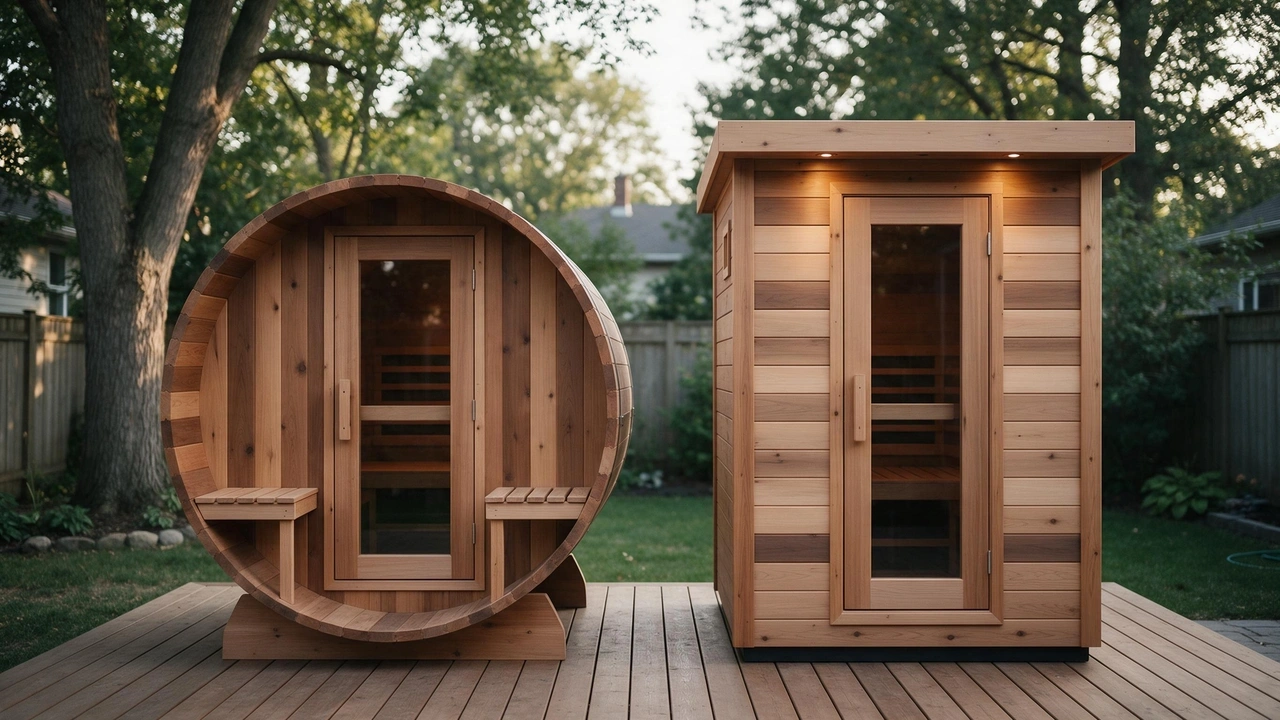
A barrel sauna is cheaper, lighter, and faster to install; a cabin sauna insulates better, offers more usable space, and lasts longer in harsh weather. For a small yard and a tight budget, barrel wins. For four-season use and resale, cabin wins.
- Typical cost
- Barrel: $4,000–$9,000. Cabin: $7,000–$18,000
- Footprint
- Barrel uses less floor area for the same seats
- Insulation
- Cabin is easier to insulate well
- Install time
- Barrel: a day. Cabin: several days to weeks
- Best for
- Barrel: small yards, mild climates. Cabin: year-round, cold climates
Some links on this page are affiliate links.If you buy through them we may earn a commission at no extra cost to you. We do not accept payment for rankings. Read the full disclosure.
| Barrel | Cabin | |
|---|---|---|
| Shape | Cylinder on a skid or cradle | Rectangular room with a pitched roof |
| Cost | $4,000–$9,000 | $7,000–$18,000 |
| Installation | Often one day, sometimes DIY | Days to weeks, foundation and framing |
| Insulation | Thin curved walls, harder to insulate | Cavity walls, easy to insulate |
| Seating | Two benches, curved ceiling limits height | L-shaped or tiered benches, more headroom |
| Weather | Snow load and rot at the cradle | Better roof and drainage, longer life |
| Resale | Movable, but a niche buyer | Adds a room-like structure to the property |
The shape is the first real decision in a sauna project, and it is not cosmetic. A barrel and a cabin are different structures with different foundations, insulation, weather behavior, and resale value. The right answer depends on where you live and how long you plan to stay.
The short version
A barrel sauna is a cylinder built from staves, usually cedar, sitting on a cradle or skid. It is cheaper, lighter, and faster to install. It fits small yards and can be moved. Its weaknesses are insulation, headroom at the edges, and moisture at the base.
A cabin sauna is a small rectangular building with a pitched roof and vertical walls. It costs more and takes longer to install, but it insulates better, offers more usable space, and behaves like a permanent structure. In cold or snowy climates, it is the more durable choice.
Cost: the gap is real
A four-person barrel kit typically runs $4,000–$9,000 before electrical and site prep. A cabin of similar capacity runs $7,000–$18,000, and the gap widens with finish level: a simple kit cabin is at the low end, a custom cedar cabin with a porch and a changing room is at the high end.
The purchase price is not the whole comparison. Add:
- Foundation: a barrel can sit on compacted gravel or a skid; a cabin usually needs a slab, piers, or a deck.
- Installation: a barrel is often a one-day kit build; a cabin is days to weeks of framing and roofing.
- Electrical: similar for both, but the run to a cabin may be longer.
- Finishing: staining, trim, and roof maintenance favor the cabin’s simpler surfaces.
Insulation and running cost
This is where the cabin earns its price. A cabin has cavity walls that can take mineral wool or foam, and a flat ceiling that is easy to insulate. A barrel’s curved staves leave little room for insulation, and the geometry is harder to seal.
In a mild climate, the difference in monthly electricity is $5–$15. In a cold climate, it can be $30–$60, and the barrel may struggle to reach temperature on a windy day. If you plan to use the sauna in winter, ask both manufacturers for the wall and roof R-value and compare honestly.
Space and comfort
A barrel uses its footprint efficiently for seating, but the curve limits headroom at the edges. Tall users often cannot stand upright near the walls. A cabin gives full-height walls, better bench layouts, and room for a changing area or a small window.
If the sauna is also your quiet room — the place you sit for 20 minutes after a workout — the cabin’s proportions matter more than the price difference. If it is a compact two-person unit on a city lot, the barrel’s efficiency wins.
Weather and maintenance
Barrels are vulnerable at the bottom. The cradle holds moisture, the lower staves stay wet, and rot can start there. A raised base, a gravel pad, and an annual inspection of the lower courses mitigate it. Snow load is another issue: a cylinder sheds snow unevenly, and the roof needs a rated structure in heavy-snow regions.
Cabins handle weather more predictably. A pitched roof drains, the walls can breathe, and the structure is easier to repair. In coastal salt air or a wet climate, cedar and a proper roof overhang make a bigger difference than the shape itself.
Resale and permits
A cabin reads as a permanent improvement. It may add to the property’s perceived value and is usually included in a sale. A barrel is movable and may be treated as personal property; some buyers like that, but it does not add the same structural value.
Permits follow the same logic. A prefab barrel on a gravel pad may need only a zoning check and an electrical permit. A cabin on a foundation is more likely to need a building permit, foundation inspection, and possibly a site plan. Check before you buy, not after.
The foundation changes the comparison
The structure you choose decides the base you have to build. A barrel can sit on compacted gravel or a timber skid; a cabin usually needs a slab, concrete piers, or a framed deck. That difference is $500–$3,000 and a weekend of work.
On a tight city lot, the barrel’s smaller footprint and lighter delivery can be the deciding factor. In a cold climate, the cabin’s insulated walls and pitched roof pay back over years of use. The base, the delivery path, and the snow load belong in the same spreadsheet as the purchase price. For the options and costs, see sauna foundation options and sauna installation cost. If space is the constraint, small backyard sauna ideas shows the layouts that actually fit.
Which one should you buy?
Buy the barrel if:
- Your yard is small and the delivery path is tight.
- You live in a mild climate and use the sauna mostly in spring, summer, and fall.
- You want the lowest installed cost and a one-day build.
- You might move and want to take it with you.
Buy the cabin if:
- You will use it year-round, including below freezing.
- You want full-height walls, better benches, and a changing area.
- You are staying in the house long enough to care about resale.
- You can handle the foundation and permit process.
The worst outcome is a cheap barrel in a cold climate that is expensive to run and uncomfortable to sit in. The second-worst is an overbuilt cabin in a mild climate that you use twice a month. Match the structure to the use, not to the photo.
How to do it
- Measure the usable footprintInclude the door swing, the heater clearance, and the space to walk around. A barrel's curved walls eat into shoulder room.
- Check the snow and wind loadAsk the manufacturer for the roof load rating. A barrel in a heavy-snow region needs a cradle and a roof plan.
- Price the foundationA barrel can sit on gravel or a skid; a cabin usually needs a slab, piers, or a deck. Add that to the comparison.
- Compare insulation, not just wallsAsk for the wall and roof R-value. A cheap barrel with no insulation is expensive to run in a cold climate.
- Decide how long you will stayIf you might move, a barrel can come with you. If this is the forever house, a cabin is the better long-term structure.
Frequently asked questions
Is a barrel sauna cheaper than a cabin?
Yes, usually by 30–50% for a comparable seat count. The barrel uses less material and ships as a kit; the cabin has more framing, roof, and finish work.
Which is better in winter?
A well-insulated cabin. Barrel walls are curved and thin, so they lose heat faster and are harder to insulate to the same R-value. In mild climates the difference is small.
Can a barrel sauna be used in a small yard?
Yes, that is its main advantage. A 4-person barrel can fit in a footprint where a cabin of the same capacity would not, because the cylinder uses the space more efficiently.
Do barrel saunas leak?
They can. The staves move with humidity, and the cradle traps moisture. A proper roof, a cover, and a gravel or raised base reduce the risk. Inspect the lower courses every year.
Which adds more resale value?
A cabin reads as a permanent structure and usually adds more perceived value. A barrel is movable and may be excluded from a sale or treated as personal property.
Can I build either one myself?
A barrel kit is within reach for a confident DIYer with two helpers. A cabin is a framing and roofing project; most buyers hire a contractor for the shell.
Sources
Some links are affiliate links.If you buy through them we may earn a commission at no extra cost to you. We do not accept payment for rankings. Read the full disclosure.