Sauna Heater Sizing Guide for Backyard Saunas
How to size a sauna heater by room volume, insulation, and electrical load.
Size a sauna heater at roughly 1 kW per 45–50 cubic feet of insulated room space, then round up to the next standard heater size.
- Rule of thumb
- 1 kW per 45–50 cu ft of insulated sauna space
- Common heater sizes
- 4.5 kW, 6 kW, 8 kW, 9 kW
- Typical circuit
- 30–60 amps at 240V, hardwired
- Clearance
- Follow manufacturer specs and NEC
Some links on this page are affiliate links.If you buy through them we may earn a commission at no extra cost to you. We do not accept payment for rankings. Read the full disclosure.
Sauna heater sizing starts with the volume of the sauna room. Measure the interior length, width, and height in feet, multiply them to get cubic feet, and divide by 45 to 50 to estimate the kilowatt rating you need. Round up to the nearest standard heater size, then confirm that your electrical panel and circuit can support the load.
Why Heater Size Matters
A sauna heater must replace heat lost through the walls, ceiling, floor, door, and glass while warming the air and rocks to the target range. If the heater is undersized, the room may take too long to heat or may not hold temperature during use. If it is oversized, the room can heat quickly, but you may pay for more capacity and a larger electrical circuit than you need.
Sizing is an estimate, not a guarantee. Insulation quality, window area, door type, and whether the sauna is indoors or outdoors all affect heat loss. Treat the calculated kilowatt number as a starting point and check the manufacturer’s specifications before purchasing.
Calculate Room Volume
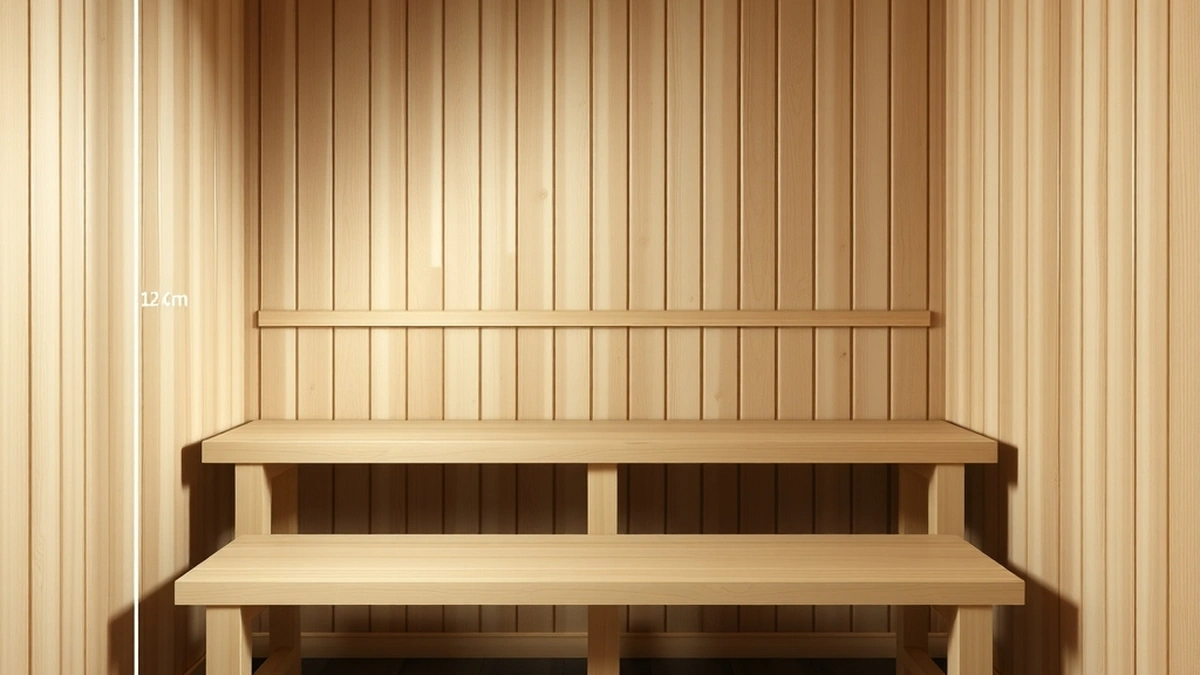
Use the interior dimensions of the sauna, not the exterior footprint. Measure in feet and inches, converting inches to decimal feet by dividing by 12.
Formula:
Length (ft) × Width (ft) × Height (ft) = Cubic feet
Example:
A barrel sauna interior measuring 7 feet long, 6 feet wide, and 7 feet high contains:
7 × 6 × 7 = 294 cubic feet
Divide by 45:
294 ÷ 45 = 6.53 kW
Divide by 50:
294 ÷ 50 = 5.88 kW
This suggests a heater in the 6 kW to 8 kW range, depending on insulation and climate. A 6 kW heater may be sufficient in a well-insulated indoor room, while an outdoor barrel sauna in a cold climate is safer with an 8 kW unit.
Standard Heater Sizes and Room Volume Estimates
Electric sauna heaters commonly come in 4.5 kW, 6 kW, 8 kW, and 9 kW ratings. The table below shows approximate insulated room volumes each size can serve under average conditions.
| Heater Size | Approx. Volume at 1 kW per 45 cu ft | Approx. Volume at 1 kW per 50 cu ft |
|---|---|---|
| 4.5 kW | 202 cu ft | 225 cu ft |
| 6 kW | 270 cu ft | 300 cu ft |
| 8 kW | 360 cu ft | 400 cu ft |
| 9 kW | 405 cu ft | 450 cu ft |
These are estimates. Add capacity if the sauna has large glass doors, uninsulated walls, or is located outdoors where wind and ambient temperature increase heat loss.
Adjust for Insulation and Location
Indoor saunas in conditioned spaces usually lose less heat than outdoor saunas. A backyard sauna exposed to winter temperatures may need the next size up from the volume calculation. For example, if your math points to exactly 6 kW and the sauna is outdoors in a northern climate, an 8 kW heater provides a margin for cold-start heating.
Poor insulation, cathedral ceilings, or extensive glass also increase the load. If you are comparing a barrel design to a rectangular cabin, review the shape and surface-area differences in our barrel vs cabin sauna overview before finalizing heater size.
Electrical Load and Circuit Requirements
Most residential sauna heaters run on 240 volts and are hardwired. To estimate amperage, divide wattage by voltage.
Example for a 6 kW heater:
6,000 watts ÷ 240 volts = 25 amps
Example for an 8 kW heater:
8,000 watts ÷ 240 volts = 33.3 amps
Example for a 9 kW heater:
9,000 watts ÷ 240 volts = 37.5 amps
Circuit breakers are typically sized at 125 percent of the continuous load, so a 6 kW heater drawing 25 amps would suggest a 30-amp circuit, while an 8 kW heater drawing 33.3 amps suggests a 40-amp or 50-amp circuit depending on wire length and local code. An electrician should confirm conductor size, breaker rating, disconnect location, and grounding according to NFPA 70 and local amendments.
If your panel lacks capacity, upgrading a service or adding a subpanel adds cost. A rough estimate for a new 240V circuit run by an electrician might range from $500 to $1,500 depending on distance and labor rates, though actual prices vary by region.
Heater Placement and Clearances
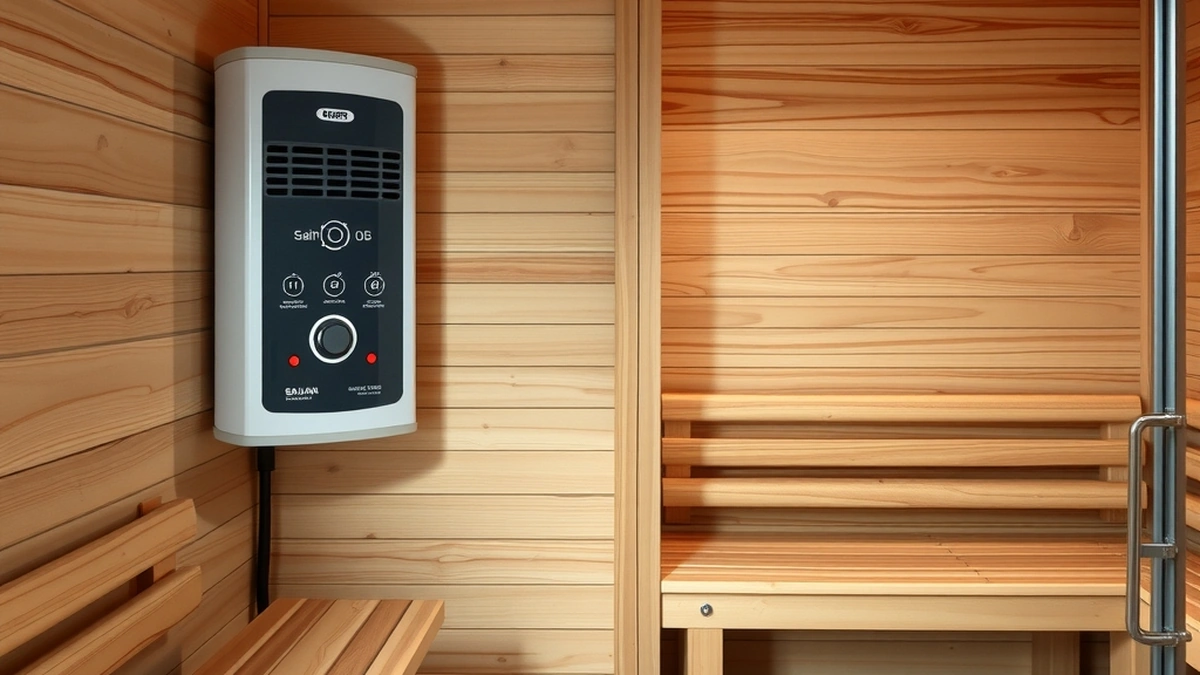
Heater size also affects where the unit can sit. Manufacturers specify minimum clearances from walls, benches, and combustible surfaces. A larger heater often requires more clearance, which can reduce usable bench space in a small sauna. Check the installation manual before choosing a location, and confirm that benches allow safe distance from heating elements.
Wall-mounted heaters save floor space, while floor-standing models may suit larger rooms. Either way, the heater should be positioned so heat distributes evenly without users sitting too close to the elements.
Cost and Operating Estimates
Operating cost depends on local electricity rates, heater size, and session length. At an average U.S. residential rate of about $0.16 per kilowatt-hour, a 6 kW heater running for one hour consumes 6 kWh and costs roughly $0.96. An 8 kW heater running for one hour consumes 8 kWh and costs roughly $1.28.
These figures assume the heater element runs continuously for the full hour. In practice, a thermostat or controller cycles the element on and off to maintain temperature, so actual energy use is lower. The cost difference between heater sizes is usually small compared with installation and equipment price, but it matters for frequent users.
If you are planning a full backyard setup, our guide to backyard sauna permits covers electrical and structural approvals that often accompany heater installation.
Matching the Heater to Your Sauna Type
Heater sizing applies across sauna styles, but the room shape changes the calculation. A barrel sauna has curved walls and less vertical volume near the edges, while a cabin sauna has flat surfaces and easier bench layout. If you are still choosing a design, see our comparison of barrel vs cabin saunas and our roundup of the best barrel sauna models for context on dimensions and typical heater pairings.
Choose a heater rated for sauna use, follow the manufacturer’s clearance and wiring instructions, and have a licensed electrician install the circuit. Proper sizing keeps the room comfortable without overpaying for capacity you cannot use.
Next, compare backyard sauna permits, barrel vs cabin sauna, best barrel sauna. before you commit.
Frequently asked questions
How do I calculate sauna room volume?
Multiply interior length by width by height in feet. The result is cubic feet, which you divide by 45 to 50 to estimate required kilowatts.
What happens if the heater is too small?
An undersized heater may struggle to reach typical sauna temperatures and can run longer, increasing wear and operating cost.
What happens if the heater is too large?
An oversized heater can heat the room quickly but may cycle frequently and require a larger electrical circuit than necessary.
Do I need an electrician for installation?
Most sauna heaters are hardwired at 240V and should be installed by a licensed electrician following local code and NFPA 70.
Does outdoor placement change sizing?
Yes. Outdoor or poorly insulated saunas lose heat faster and often need the next heater size up compared to an indoor room of the same volume.
Can I use a 120V heater for a backyard sauna?
120V heaters exist but are generally small and better suited to compact indoor spaces; most backyard saunas use 240V models.
Sources
Some links are affiliate links.If you buy through them we may earn a commission at no extra cost to you. We do not accept payment for rankings. Read the full disclosure.