Sauna installation cost: a real breakdown
What a backyard sauna costs installed in 2026, line by line: shell, foundation, electrical, labor, permit, delivery, and the site work that blows the budget.
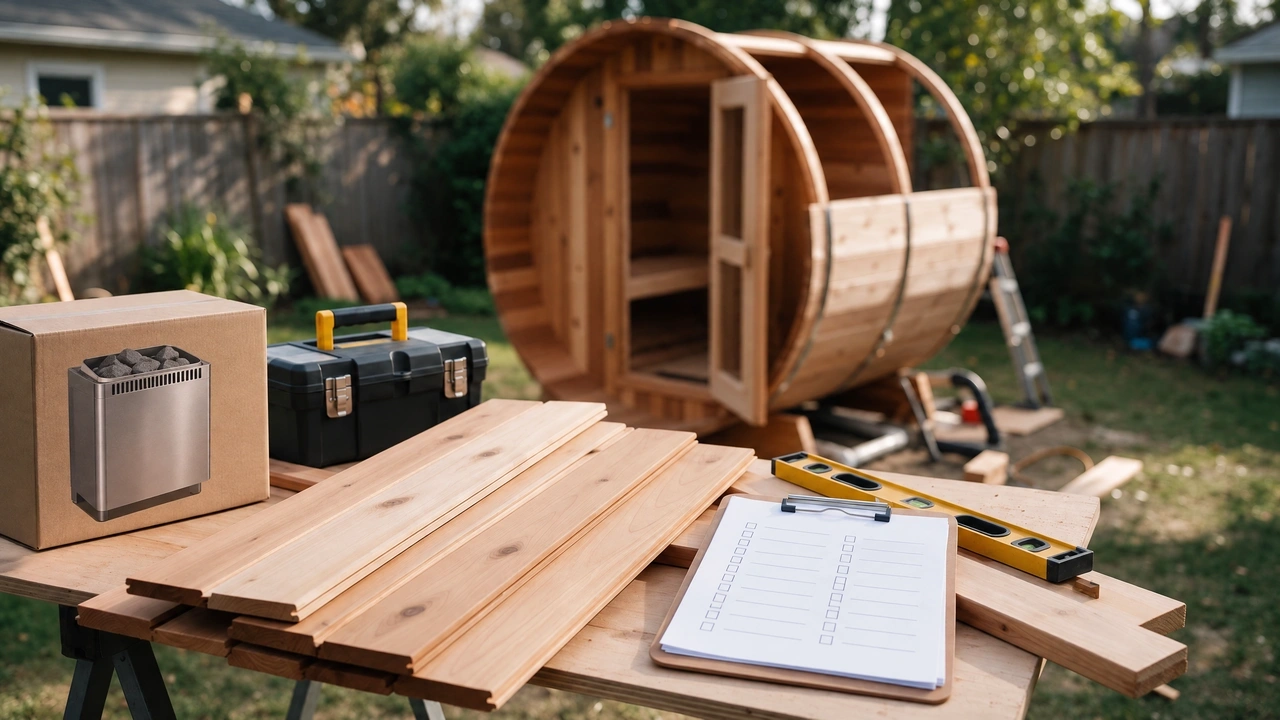
A budget barrel sauna costs $4,000–$7,000 installed, a mid cabin $8,000–$14,000, and a custom build $15,000–$30,000+. Electrical, foundation, and site access move the total more than the shell does.
- Budget barrel
- $4,000–$7,000 installed
- Mid cabin
- $8,000–$14,000 installed
- Custom build
- $15,000–$30,000+ installed
- Biggest variable
- Electrical run and site access
- Usually excluded
- Deck, landscaping, panel upgrade
Some links on this page are affiliate links.If you buy through them we may earn a commission at no extra cost to you. We do not accept payment for rankings. Read the full disclosure.
| Kit sauna | Custom build | |
|---|---|---|
| Design | Fixed model, few options | Drawn to the site |
| Lead time | 2–12 weeks | 3–6 months |
| Shell cost | $2,400–$8,000 | $9,000–$16,000 |
| Site work | Gravel pad or small slab | Slab, piles, or a deck |
| Permit path | Simpler, often no plans | Plans and multiple inspections |
| Resale | Can be moved | Becomes part of the property |
A backyard sauna costs about $4,000–$7,000 installed for a barrel, $8,000–$14,000 for a mid-size cabin, and $15,000–$30,000 or more for a custom build. The shelter is rarely what decides the number. Electrical, foundation, and site access move the total by several thousand dollars, and they are the three lines most quotes leave vague.
Installed cost means the sauna sits on its foundation, is wired to a dedicated circuit, has passed inspection, and is ready to heat. Anything short of that is a kit price with a delivery fee attached.
What “installed” actually includes
A complete installed price covers seven things: the shell, the foundation or pad, delivery, assembly, the heater, the electrical circuit, and the permit. Some sellers bundle assembly; almost none bundle the circuit. If a quote is one number, ask which of the seven it contains.
The usual exclusions are just as important: landscaping, a deck or steps, fence removal and reinstallation, a panel upgrade, a crane, and long-distance freight. Those items do not disappear because they were not quoted. They reappear on a separate invoice.
The line items, one at a time
The ranges below are for a typical residential install in 2026, not a premium brand or a difficult site.
| Line item | Budget barrel | Mid cabin | Custom |
|---|---|---|---|
| Shell or kit | $2,400–$4,000 | $5,500–$8,000 | $9,000–$16,000 |
| Foundation or pad | $150–$600 | $900–$1,800 | $2,000–$4,000 |
| Delivery | $0–$500 | $300–$700 | $500–$2,000 |
| Electrical | $650–$1,100 | $900–$1,600 | $1,500–$3,000 |
| Heater and controls | $450–$700 | $600–$1,000 | $900–$1,800 |
| Permit and inspection | $0–$250 | $150–$450 | $300–$900 |
| Labor and interior finish | $0–$400 | $300–$900 | $1,500–$5,000 |
| Installed total | $4,000–$7,000 | $8,000–$14,000 | $15,000–$30,000+ |
The line-item columns are independent ranges, so the low ends do not add up to a real quote. They stack into a floor near $3,650 for a barrel and $8,650 for a cabin. The totals in the last row are what most projects actually pay once delivery, the permit, and one site surprise are included.
The foundation deserves its own paragraph. A gravel pad is cheap because it is gravel, a landscape fabric layer, and an hour with a plate compactor. A slab is concrete, formwork, and a pour, priced by the square foot rather than the sauna. A 48-square-foot slab at $14 per square foot is $672 before site prep.
Electrical is the line with the widest spread. A 30-amp circuit with 40 feet of wire, a disconnect, and a permit commonly runs $650–$1,100. A 100-foot buried run adds trenching at roughly $10–$30 per foot, which is $1,000–$3,000 before the conductor. A panel that cannot carry another 30–50 amps adds $1,500–$4,000. The full circuit detail is in sauna electrical requirements.
Three totals that add up
A budget barrel, four-person, on a gravel pad:
shell            $3,200
gravel pad         $350
delivery           $400
30 A circuit       $950
6 kW heater        $650
permit             $180
total            $5,730
A mid-size cabin, 6×8, on a slab:
shell            $7,500
slab and prep    $1,100
delivery           $600
40 A circuit     $1,500
8 kW heater        $900
permit             $350
total           $11,950
A custom cabin, 8×10 with a small porch:
shell           $14,000
foundation       $3,500
delivery/crane   $1,200
electrical       $2,400
heater/controls  $1,600
permit             $700
interior labor   $4,000
total           $27,400
None of these include a deck, landscaping, or a panel upgrade. Each of those can add four figures on its own.
What moves the number most
Three items account for most of the variance between a $5,000 project and a $25,000 one.
The electrical run. Distance from the panel, trench depth, and available service capacity set the price. A sauna 20 feet from the panel is a different project from one 120 feet away at the back of the lot.
The foundation. Gravel, slab, helical piles, and a framed deck are four different budgets. A slope or a high water table adds engineering and drainage.
Site access. A barrel that fits through a 36-inch gate can be rolled into place. One that does not needs a crane, a fence panel removed, or a different model. This is discovered on delivery day more often than at the quote stage.
Heater size matters less than people expect. Moving from 6 kW to 8 kW is a few hundred dollars for the unit and possibly a breaker and wire change. Moving a circuit 100 feet is thousands.
Kit or custom shell
A kit is a fixed design built in a factory and delivered in panels or as a barrel. You get a predictable price, a short build window, and fewer decisions. You also get whatever dimensions the manufacturer offers, which may not fit the only flat spot in the yard.
A custom shell is framed on site or built to drawings. It fits the site, can hide the electrical, and can match the house. It also needs drawings, a longer permit review, and a builder who has done a sauna before. The comparison table above is the short version; the long version is in barrel vs cabin sauna.
Site access: the line nobody quotes
Measure the path before you order. Gate width, the turn at the corner of the house, overhead branches, a septic lid, and the slope of the yard all decide how the shell arrives. A crane is $500–$1,500 for a short lift. Removing and rebuilding a fence section is $300–$1,200. A long hand-carry with four people is a day of labor and a lot of scratched cedar.
If the sauna cannot reach the pad, the project stops. That is not a construction problem you can solve with a bigger heater.
Where budgets leak
The overruns are predictable:
- A panel that turns out to be full, adding a subpanel or service upgrade.
- A slab that needs a permit and an inspection the homeowner did not expect.
- A heater bought before the circuit was sized, then returned.
- A delivery that arrives before the pad is cured.
- A permit revision after the site plan is submitted.
- A “free” installation that excludes the disconnect, the conduit, or the gravel.
The remedy is boring. Get a written scope with eight lines, not one. Confirm the permit path with the building department using the model and dimensions, as covered in backyard sauna permits. Then add 10% for what the site has not told you yet.
The short version
Budget $4,000–$7,000 for a barrel, $8,000–$14,000 for a cabin, and $15,000–$30,000 or more for custom. Price the electrical and the foundation before you fall in love with a shell, because those two lines decide whether the project fits your budget. The running cost is a separate, much smaller number; sauna running cost covers it.
If the site is sloped, the panel is full, or the only access is through the house, call a contractor and an electrician before you order anything. Those three conditions are where a sauna budget stops being a kit price and becomes a construction project.
How to do it
- Measure the site and the access pathWalk the delivery route with a tape. Gate width, fence corners, and overhead branches decide whether the shell arrives on a truck or a crane.
- Get three electrical quotesGive each electrician the heater nameplate and the distance to the panel. The spread between quotes is usually the trench and the available panel capacity.
- Price the foundation twiceQuote a gravel pad and a concrete slab. The difference is often $800–$2,500, and it can change the permit path as well as the total.
- Add permit and inspection feesAsk the building department for the fee schedule in writing, including the separate electrical permit and any reinspection fee.
- Hold a 10% contingencyKeep 10% of the total unspent. Site work is where surprises live: a buried line, a root ball, or a slab that needs a truck nobody scheduled.
Frequently asked questions
How much does it cost to install a sauna in a backyard?
Most homeowners spend $4,000–$14,000 installed. A prefab barrel on a gravel pad sits at the bottom of that range; a cabin on a slab with a longer electrical run sits at the top. Custom builds start around $15,000.
Is installation included in the sauna price?
Rarely. Kit prices usually cover the shell and sometimes the heater, not the foundation, delivery, assembly, electrical circuit, or permit. Ask for a line-item quote rather than a single installed number.
How much does the electrical work add?
A straightforward 240-volt circuit runs about $600–$1,500. A trench over 50 feet, a subpanel, or a service upgrade can push the electrical line to $2,500–$4,000, which is often the largest single overrun.
Do I need a concrete slab for a sauna?
Not always. A barrel sauna can sit on a compacted gravel pad, which costs $150–$600 and drains well. A cabin with a wood floor usually wants a slab or pier foundation for level, dry support.
How long does installation take?
A prefab barrel is often set and wired in one to three days once the pad and circuit exist. A cabin kit takes three to seven days. Custom construction runs six to sixteen weeks, and permits add their own queue.
What is usually not included in an installed price?
Landscaping, a deck or steps, fence removal, a panel upgrade, gutter work, and long-distance delivery. Get those as separate lines so you can see what the sauna actually costs versus what the site costs.
Sources
Some links are affiliate links.If you buy through them we may earn a commission at no extra cost to you. We do not accept payment for rankings. Read the full disclosure.