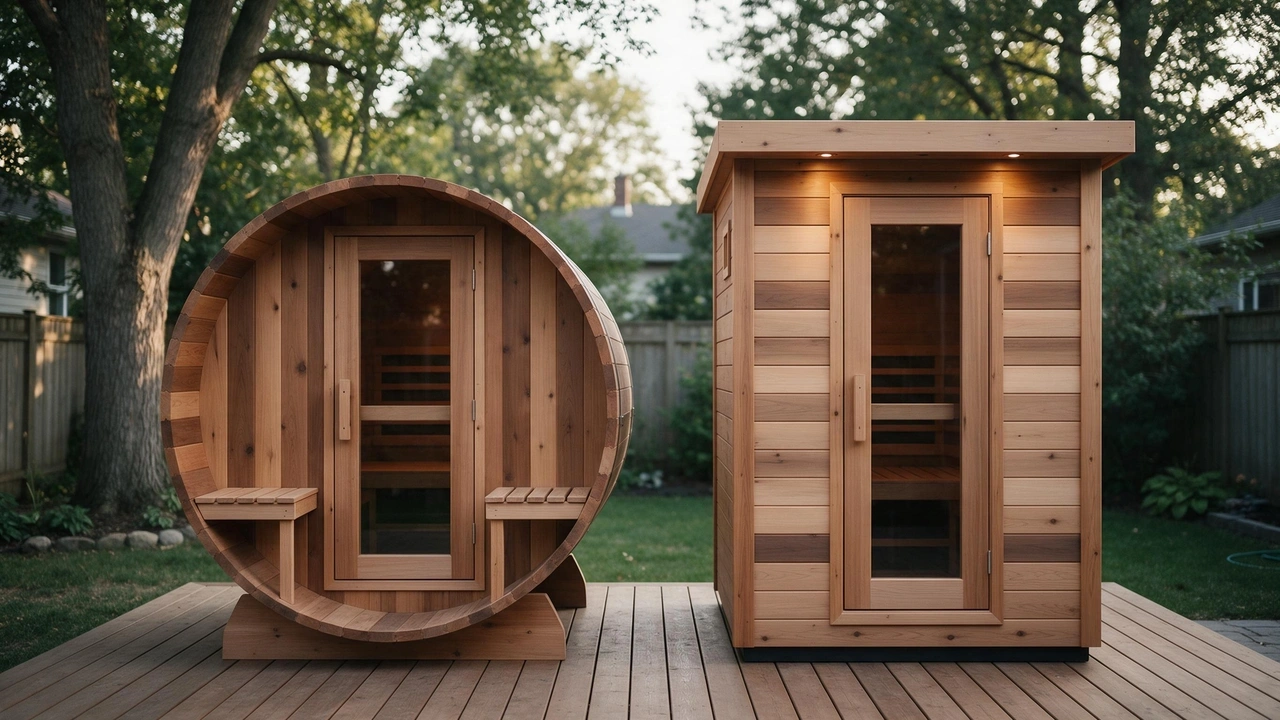
Infrared vs traditional sauna: which one
Infrared and traditional saunas compared on how they heat, air temperature, session length, warm-up, electrical load, running cost, and who each suits.
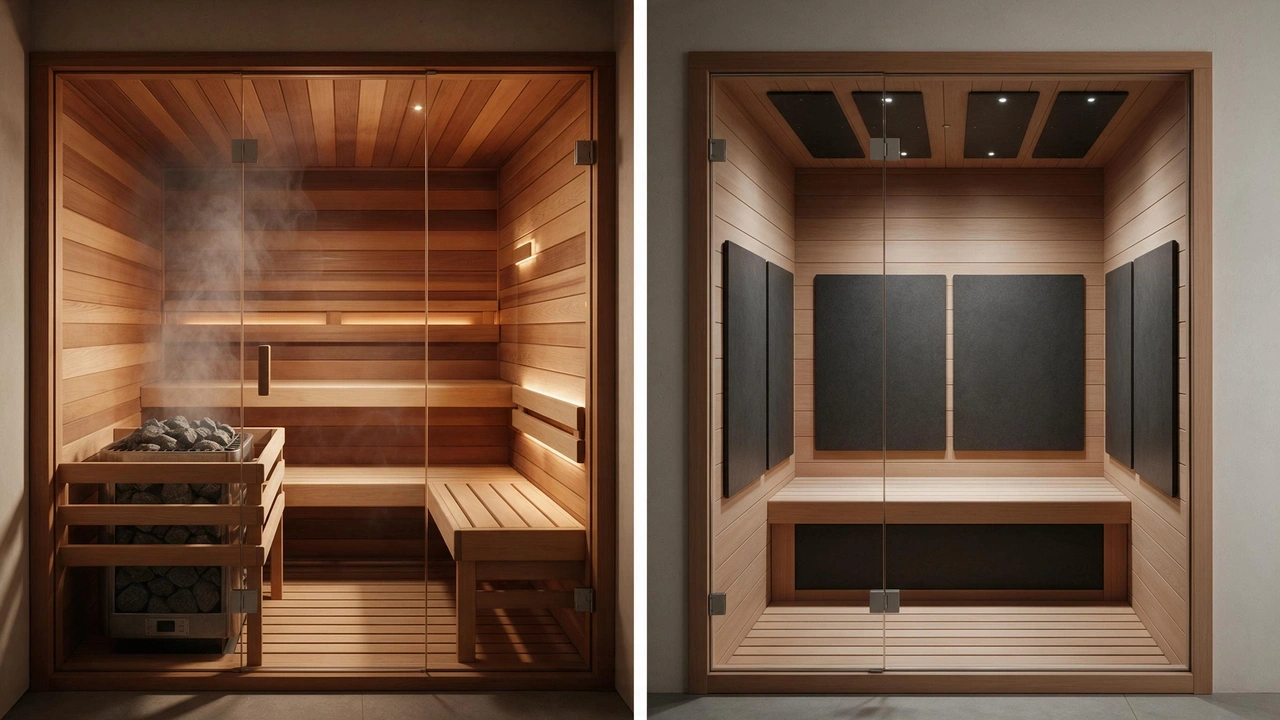
Infrared saunas warm people and surfaces with radiant panels at a lower air temperature. Traditional saunas heat air and stones to 160–200°F and make steam. Infrared draws about 1.8 kW; traditional needs 6–9 kW.
- Infrared air temp
- 110–140°F
- Traditional air temp
- 160–200°F
- Infrared load
- 1.5–2 kW, often 120 V
- Traditional load
- 6–9 kW, 240 V
- Monthly cost
- About $4–$35
Some links on this page are affiliate links.If you buy through them we may earn a commission at no extra cost to you. We do not accept payment for rankings. Read the full disclosure.
| Infrared | Traditional | |
|---|---|---|
| Mechanism | Radiant panels warm people and surfaces | Heater and stones warm the air |
| Air temperature | 110–140°F | 160–200°F |
| Warm-up | 10–20 minutes | 30–60 minutes electric; 60–90 wood |
| Session | 30–45 minutes | 2–4 rounds of 10–20 minutes |
| Electrical load | 1.5–2 kW, often 120 V | 6–9 kW, 240 V, dedicated circuit |
| Running cost | About $4–$8 per month | About $15–$35 per month |
The difference is not the number on the dial. It is how the heat reaches your skin. An infrared sauna warms you directly with radiant panels while the air stays comparatively cool. A traditional sauna heats the air and stones, and a ladle of water turns that stored heat into steam.
An infrared sauna is a cabin lined with electric radiant panels, usually far-infrared, that heat people and surfaces rather than the air. A traditional sauna is a room with a heater and a pile of stones; the heater warms the air, and water on the stones creates löyly, the steam burst that defines the Finnish experience.
The short answer
Infrared is the easier product to install: lower electrical load, faster warm-up, no drain, no steam. Traditional is the more intense experience: hotter air, real steam, and a ritual that works well outdoors and in cold weather.
Neither is automatically better. The right choice depends on where the sauna goes, how much power you have, and whether you want to sit in 130°F air or throw water on hot rocks.
How the heat actually arrives
A traditional heater warms the air by convection and radiates from the stones. The air reaches 160–200°F, the ceiling is hotter than the bench, and your skin is surrounded by heat. When you pour water on the stones, the steam condenses on your skin and releases latent heat; that is why a steam burst feels hotter than the air temperature suggests.
Infrared panels emit electromagnetic energy that is absorbed by your skin and by nearby surfaces. The air may stay at 110–140°F, but the panels can feel intense on bare skin. There is no stone mass and no steam unless the cabin has a separate steamer. The heat is directional: you feel the panel in front of you more than the air behind you.
Air temperature is not felt temperature
This is the most common confusion in the infrared-versus-traditional argument. A 130°F infrared cabin can feel hotter than a 160°F traditional room, because the panels beam directly at you. In a traditional sauna, you can sit on a low bench and be noticeably cooler than the thermometer at the ceiling.
Humidity changes the perception again. Traditional saunas run at low humidity until you add water, then spike. Infrared cabins are dry. Two people can sit in the same cabin and describe the heat differently, which is why the thermostat is a poor way to compare the two.
Warm-up and session length
Infrared panels reach operating temperature in 10–20 minutes. A session typically runs 30–45 minutes, and many people read or listen to something while they sit.
A traditional electric heater needs 30–60 minutes to heat the room and stones; a wood-burning stove can take 60–90 minutes from cold. Sessions are shorter and repeated: two to four rounds of 10–20 minutes, with a cool-down between. The total time is often 45–90 minutes, including the breaks.
That difference matters more than the purchase price. A sauna you can start after work and use for 30 minutes gets used. A sauna that needs an hour of notice becomes a weekend ritual.
Electrical load and monthly cost
An infrared cabin typically draws 1.5–2 kW. At 1.8 kW and 120 volts, that is 15 amps, which is why many units run on a dedicated 20-amp, 120-volt circuit. Larger infrared cabins may use 240 volts.
A traditional heater is a different class of load. A 6 kW unit at 240 volts draws 25 amps and needs a 30-amp breaker with 10-gauge copper wire. An 8 kW unit draws 33.3 amps and moves to a 40-amp breaker and 8-gauge wire. A 9 kW unit draws 37.5 amps and needs 50 amps and 6-gauge wire. The circuit is hardwired, with a disconnect in sight of the heater. The details are in sauna electrical requirements.
The running cost follows the load:
Infrared:    1.8 kW × 0.67 h × 5 sessions × 4.33 = 26 kWh ≈ $4.42
Traditional: 6.0 kW × 1.50 h × 3 sessions × 4.33 = 117 kWh ≈ $19.89
Both figures use 17 cents per kWh. The infrared number assumes 40-minute sessions five times a week; the traditional number assumes 90 minutes three times a week, including heat-up. Your rate, insulation, and habits can double either one. Sauna running cost has the full arithmetic.
Installation constraints
Infrared is an indoor product in most cases. It needs a dry room, a dedicated circuit, clearance around the panels, and a floor that can take the cabinet’s weight. No drain, no chimney, no foundation. Outdoor infrared units exist, but they need shelter and a manufacturer rating for exterior use.
Traditional is a small building project. It needs a level base, a 240-volt circuit, ventilation, and a drain or a floor that can handle water. An outdoor cabin needs a foundation, a roof, and clearances to combustible walls. A wood-burning stove adds a chimney, a fresh-air intake, and an insurance conversation. Start with backyard sauna permits before you buy either.
Who each one suits
Infrared suits:
- An apartment, condo, or basement where a 240-volt circuit and a drain are not available.
- A household that wants a 30-minute session without a long heat-up.
- Someone who prefers gentle, dry heat and does not care about steam.
- A room where the sauna is also a quiet place to read.
Traditional suits:
- A backyard where the sauna is a destination and the ritual matters.
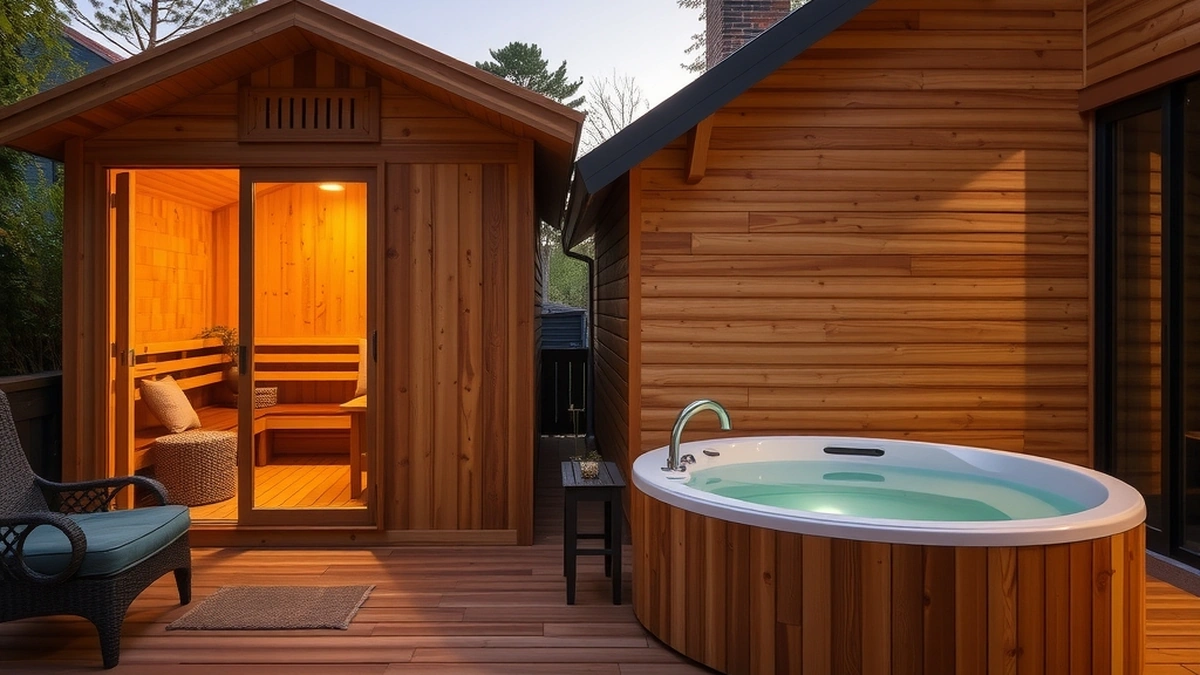
- A household that wants steam, a cold plunge, and a reason to sit outside in winter.
- A property with panel capacity for a 30–50 amp circuit and room for a foundation.
- A buyer who cares about resale and a permanent structure.
The health question, handled honestly
People use both kinds of sauna as part of relaxation and recovery routines. That is a reasonable reason to own one. It is not a medical treatment, and neither type treats, cures, or prevents any condition.
Heat raises your heart rate and body temperature regardless of how it is delivered. Drink water, avoid alcohol before a session, and get out if you feel dizzy. If you have a cardiovascular condition, are pregnant, or take medication that affects blood pressure or sweating, talk to a clinician before using either.
The short version
Buy infrared if the sauna is going indoors, the electrical panel is modest, and you want a short, dry, low-commitment session. Buy traditional if you have the yard, the circuit, and the appetite for steam, and you want the sauna to feel like a place rather than an appliance.
Do not buy either for a health claim. Buy the heat you will actually use.
Frequently asked questions
Is infrared as hot as a traditional sauna?
The air is not. An infrared cabin typically runs 110–140°F, while a traditional sauna runs 160–200°F. The panels radiate directly at your skin, so it can feel hotter than the thermometer suggests.
Which is cheaper to run, infrared or traditional?
Infrared, usually by 60–75%, because the elements draw 1.5–2 kW and sessions are shorter. A 6 kW traditional sauna used three times a week costs about $20 a month at 17 cents per kWh.
Can I put an infrared sauna in an apartment?
Often yes, because many models run on a dedicated 120-volt, 20-amp circuit and need no drain. Check the lease, the building's electrical capacity, and the manufacturer's clearance requirements first.
Do traditional saunas need a special electrical circuit?
Yes. A 6–9 kW heater is hardwired at 240 volts on a dedicated 30–50 amp circuit with copper wire and a disconnect. A licensed electrician and a permit are standard.
Which is better for cold climates?
A well-insulated traditional cabin, especially one with a wood-burning stove. Infrared units can be used outdoors only if the manufacturer rates them for it, and they lose more heat in a cold, exposed location.
Do either of these saunas treat medical conditions?
No. People use both for relaxation and recovery routines, but neither treats, cures, or prevents disease. Talk to a clinician before using either if you have a cardiovascular condition.
Sources
Some links are affiliate links.If you buy through them we may earn a commission at no extra cost to you. We do not accept payment for rankings. Read the full disclosure.