Sauna running cost: what it costs per month
A realistic monthly electricity cost for a backyard sauna, with the kW × hours formula, a state-by-state rate table, and the hidden costs owners forget.
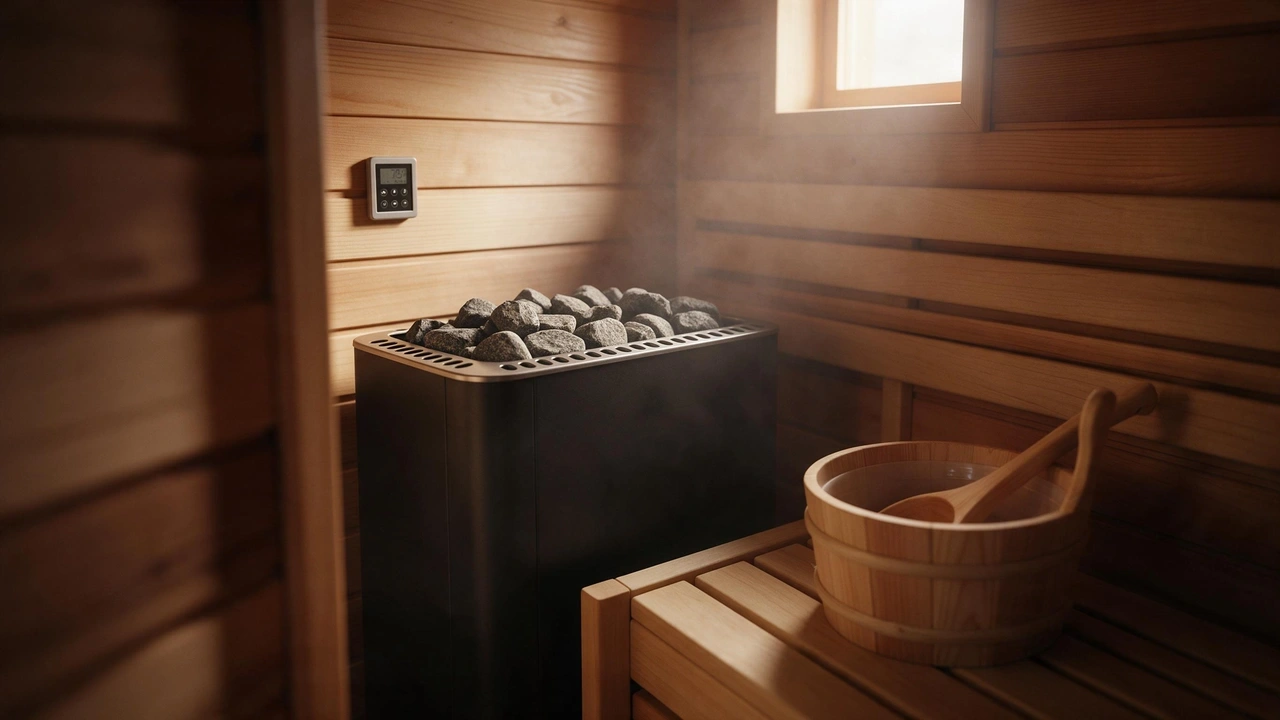
A 6 kW electric sauna used three times a week for 90 minutes costs roughly $18–$30 a month at a US average electricity rate of about 17 cents per kWh. An 8 kW cabin used four times a week runs $30–$55. Infrared saunas are cheaper to run but feel different.
- Typical range
- $15–$60 per month
- Formula
- kW × hours × your rate
- 6 kW, 3×90 min
- ≈117 kWh, ≈$20/month at 17¢
- 8 kW, 4×90 min
- ≈208 kWh, ≈$35/month at 17¢
- Biggest variable
- Your electricity rate, not the heater
Some links on this page are affiliate links.If you buy through them we may earn a commission at no extra cost to you. We do not accept payment for rankings. Read the full disclosure.
| Traditional 6 kW | Infrared 1.8 kW | |
|---|---|---|
| Typical session | 60–90 min | 30–45 min |
| Sessions per week | 3 | 5 |
| kWh per month | ≈117 | ≈65 |
| Cost at 17¢ | ≈$20 | ≈$11 |
| Heat feel | Air and stone, 160–200°F | Radiant, lower air temp |
The monthly bill is the least scary number in a sauna project. A 6 kW heater used three times a week is roughly 117 kWh a month — about $20 at the US average residential rate. The purchase and installation are where the money goes. Still, the running cost is worth calculating honestly, because it changes how often you actually use the thing.
The formula, without the hand-waving
Electricity cost is kilowatts × hours × rate. For a sauna:
monthly kWh = heater kW × (sessions/week × minutes/session ÷ 60) × 4.33
monthly cost = monthly kWh × your all-in rate
A 6 kW heater, three sessions a week, 90 minutes each (or plug your own numbers into the cost calculator):
6 × (3 × 1.5) × 4.33 = 117 kWh
117 × $0.17 = $19.89
An 8 kW cabin, four sessions a week, 90 minutes:
8 × (4 × 1.5) × 4.33 = 208 kWh
208 × $0.17 = $35.36
An infrared sauna at 1.8 kW, five sessions a week, 40 minutes:
1.8 × (5 × 0.667) × 4.33 = 26 kWh
26 × $0.17 = $4.42
The infrared number looks almost free because the heater is small and the sessions are short. That does not make it a better sauna; it makes it a different product. Traditional saunas heat the air and stones to 160–200°F. Infrared panels radiate at a lower air temperature. Compare the experience, not just the bill.
Your rate matters more than your heater
The US average residential rate was about 17–18 cents per kWh in 2026, but the spread is enormous. Roughly:
| Market | All-in rate | 6 kW sauna, 3×90 min |
|---|---|---|
| Low-cost states (South, Northwest hydro) | 10–13¢ | $12–$15 |
| US average | 17–18¢ | $20–$21 |
| High-cost states (CA, MA, NY, HI) | 28–45¢ | $33–$53 |
Use the all-in rate from your bill: supply plus delivery plus taxes and fixed fees allocated per kWh. The headline “12 cents” on a marketing page is rarely what you pay.
The hidden costs owners forget
Electricity is not the only recurring cost. A realistic annual budget includes:
- Heater elements: $100–$300 every 3–7 years, depending on water quality and use.
- Stones: $50–$150 every 2–4 years; some stones crack and need replacing sooner.
- Cover and door seal: $100–$300 every 3–5 years.
- Wood treatment: $30–$80 a year for oil or stain on an exterior sauna.
- Repairs: a control board or contactor can be $150–$500.
None of these are dramatic, but together they add $100–$400 a year to the “free” heat.
What changes the number most
Five variables explain most of the difference between a $15 bill and a $60 bill:
- Electricity rate. A 30-cent rate doubles the bill of a 15-cent rate before anything else changes.
- Sessions per week. Going from two to five sessions is a 150% increase in kWh.
- Session length. A 60-minute session uses two-thirds of the energy of a 90-minute session.
- Insulation and cover. A leaky barrel in wind can use 20–40% more than an insulated cabin.
- Heater size versus room size. An oversized heater heats faster but short-cycles; an undersized heater runs longer.
A cold-climate owner with an 8 kW cabin, four 90-minute sessions a week, and a 28-cent rate pays about $58 a month, not $35. The arithmetic is the same; the inputs are worse. That is why a quoted “average” is close to useless without the rate and the usage pattern.
The purchase side is a separate budget. If you are still comparing installed prices, see sauna installation cost. If you are deciding between heat types, infrared vs traditional shows how the kWh difference plays out.
How to keep the bill down
- Insulate properly. A barrel sauna with thin walls loses heat fast. A cabin with 2×4 walls and insulation holds temperature with a smaller heater.
- Use a cover. An outdoor sauna without a cover loses heat through the roof and door.
- Heat on a timer. Start 30–45 minutes before use instead of leaving the heater on all evening.
- Size the heater to the room. Oversized heaters short-cycle and can overshoot; undersized heaters run forever.
- Close the door. An open door during heat-up is the most common waste.
- Check off-peak rates. Some utilities offer a lower rate at night; a sauna is a flexible load.
The cost of keeping it running
Electricity is only one line in the ownership budget. A sauna heater element set lasts roughly three to seven years and costs $100–$300 to replace. Stones crack and need topping up every few seasons. An outdoor cover and a door seal are consumables, not permanent parts. Budget $100–$400 a year for these items, and keep a spare element on hand if the sauna is your main recovery routine. None of this changes the monthly number much, but it changes the ten-year cost by more than a thousand dollars — which is the number worth comparing when you choose between a cheap kit and a better-insulated cabin.
Compare it with the alternative
A single 60-minute session at a commercial sauna or spa in a US city often costs $30–$60. A gym with a sauna is $40–$80 a month. If you use your own sauna three times a week, the electricity is $20–$35 a month — less than one spa visit. The break-even is not the electricity; it is the purchase price. At $6,000 installed, the sauna pays for itself in spa visits only after several years, and that assumes you would have gone.
The honest reason to build one is that you will use it more often than you use a gym. The electricity bill is the small print, not the obstacle.
How to do it
- Find your rateLook at the supply and delivery lines on your electricity bill, not just the headline rate. Add them together for the all-in cents per kWh.
- Estimate hours per monthMultiply sessions per week by minutes per session, divide by 60, then multiply by 4.33 weeks.
- Multiply by heater kWUse the nameplate kilowatts, not the marketing number. A 6 kW heater draws 6 kW while the elements are on.
- Add a bufferAdd 10–20% for heat-up, insulation losses, and controls. A cold sauna uses more than a warm one.
- Compare with the alternativePrice a gym, spa, or infrared studio session. The monthly sauna cost often equals two or three visits.
Frequently asked questions
Is it cheaper to leave a sauna on all day?
No. A sauna heater should be on only when you use it. Leaving it at temperature for hours wastes electricity and dries out the wood. A timer that starts 30–45 minutes before use is the efficient compromise.
How much does a sauna cost to run in California?
At a residential rate of roughly 30–40 cents per kWh, a 6 kW sauna used three times a week costs about $35–$55 a month. The heater is the same; the rate is the difference.
Do infrared saunas cost less to run?
Yes, typically 40–60% less, because the elements are 1.5–2 kW and sessions are shorter. The trade-off is a different kind of heat and a lower air temperature.
Does a bigger heater cost more to run?
Per session, a bigger heater uses more power but heats the room faster. A well-insulated small sauna with a 6 kW heater is usually cheaper than a leaky large one with a 9 kW heater.
What else costs money besides electricity?
Heater elements, stones, a cover, door seals, and occasional repairs. Budget $50–$150 a year for consumables and $300–$800 for a heater replacement every 5–10 years.
Can solar panels cover a sauna?
A 6 kW heater draws more than most residential solar arrays produce in the moment, but net metering can offset the annual kWh. The sauna is a small load compared with an EV or heat pump.
Sources
Some links are affiliate links.If you buy through them we may earn a commission at no extra cost to you. We do not accept payment for rankings. Read the full disclosure.