Sauna Controls Explained for Backyard Saunas
A guide to sauna control types, wiring, placement, and operating costs for backyard sauna heaters.
Sauna controls are the thermostat, timer, and switch assembly that regulate heater temperature and session length; most residential units run on 240V and require hardwiring.
- Common voltage
- 240V (residential)
- Typical breaker
- 30–60 amps
- Control location
- Outside the sauna room
- Timer limit
- 60 minutes (typical max)
- Estimated install cost
- $300–$900
Some links on this page are affiliate links.If you buy through them we may earn a commission at no extra cost to you. We do not accept payment for rankings. Read the full disclosure.
Sauna controls are the components that let you set temperature, start the heater, and limit session length. They typically include a thermostat, timer, and power switch, and they are almost always mounted outside the sauna room so you do not have to reach into the heat to adjust them. This guide covers control types, electrical requirements, placement, and estimated operating costs for backyard sauna installations.
Types of Sauna Controls
Most backyard saunas use one of three control configurations. The right choice depends on the heater model, voltage, and whether the controls are built into the heater or mounted separately.
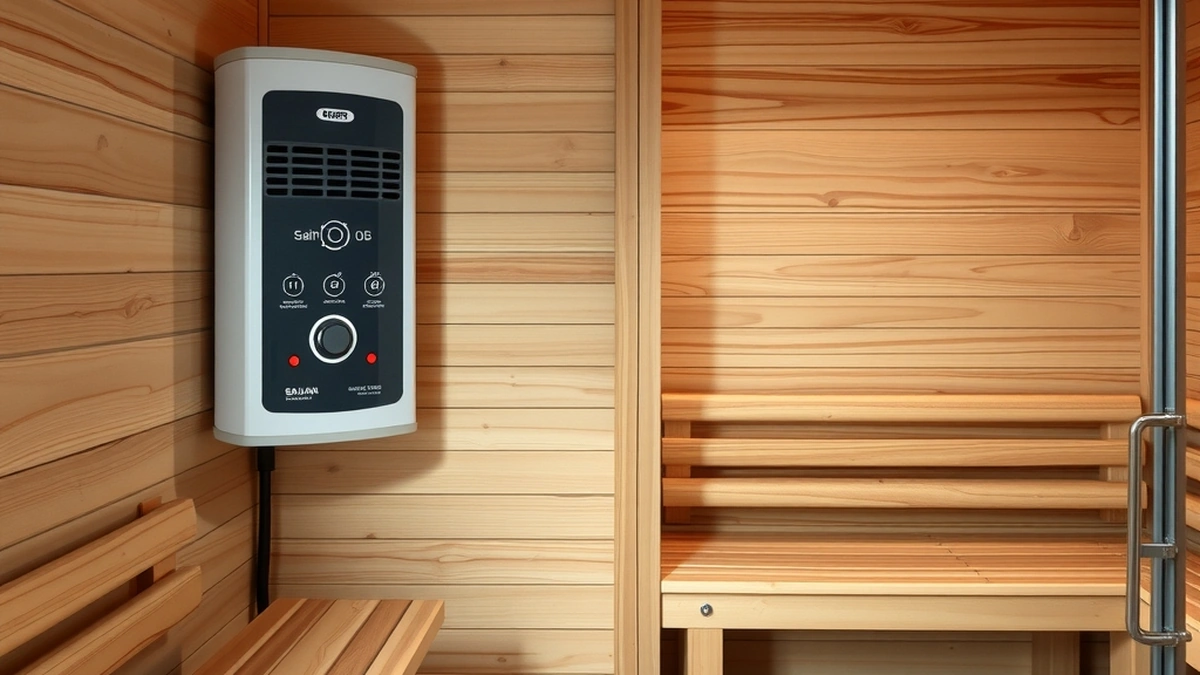
Integrated controls are built into the heater housing. They are common on smaller plug-in or pre-wired residential heaters and reduce the number of wall components you need to install.
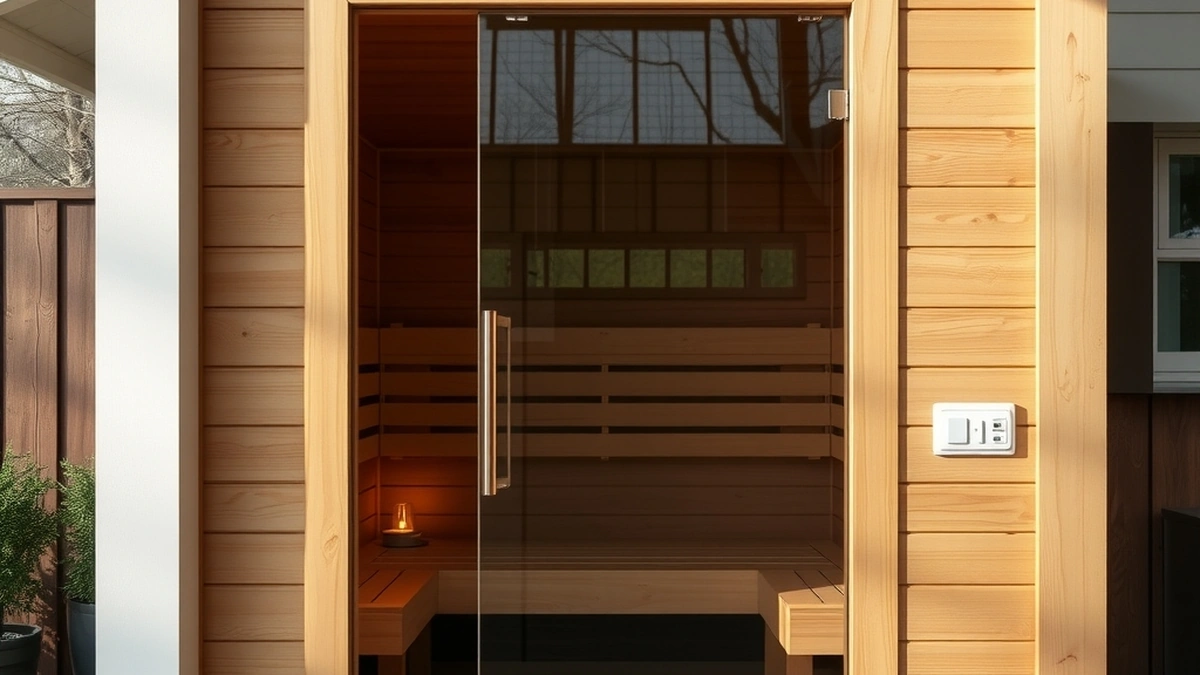
Wall-mounted external controls sit on the exterior wall of the sauna, usually near the door. They connect to the heater through low-voltage wiring and line-voltage power cables. This is the most common setup for hardwired 240V backyard saunas.
Remote or app-enabled controls let you preheat the sauna from inside the house. These add cost and require a Wi-Fi or radio connection between the control module and the heater. They are optional and not required for safe operation.
Electrical Requirements and Load Math
Residential sauna heaters typically run on 240 volts and draw significant current. The control panel itself uses very little power, but the heater it switches can draw 30 to 60 amps or more.
To estimate the load, divide the heater wattage by voltage:
- A 6,000-watt heater at 240 volts draws 25 amps (6,000 / 240 = 25).
- An 8,000-watt heater at 240 volts draws about 33 amps (8,000 / 240 = 33.3).
- An 11,000-watt heater at 240 volts draws about 46 amps (11,000 / 240 = 45.8).
Breakers are sized at 125 percent of the continuous load where required by local code, so a 6,000-watt heater might pair with a 30-amp breaker, while an 11,000-watt heater might need a 60-amp breaker. Wire gauge must match the breaker and heater manufacturer specifications. Controls should be on a dedicated circuit shared with no other major appliances.
Installation estimates vary by region and distance from the breaker panel. A straightforward run might cost $300 to $600 in labor and materials. A longer trench or panel upgrade could push the total to $900 or more. These are estimates; a licensed electrician should provide the final quote.
Control Placement and Clearances
Mount sauna controls outside the sauna room, typically on the adjacent exterior wall. The standard mounting height is about 5 to 6 feet above the finished floor, which keeps the display readable and the controls out of reach of children.
Keep the following clearances in mind:
- Do not mount controls inside the sauna room unless the manufacturer explicitly rates them for high heat and humidity.
- Maintain the manufacturer’s specified distance from the heater and sauna stones.
- Route control wiring through conduit where required by local electrical code.
- Leave enough cable slack to service the control without removing it from the wall.
If your sauna is a barrel or cabin model, the control location may affect how you orient the door and benches. For more on comparing those styles, see our breakdown of barrel vs. cabin sauna.
Analog vs. Digital Controls
Analog controls use a rotary dial for temperature and a mechanical timer knob. They are generally less expensive, easier to service, and less likely to fail from moisture exposure. The tradeoff is coarser temperature adjustment and fewer features.
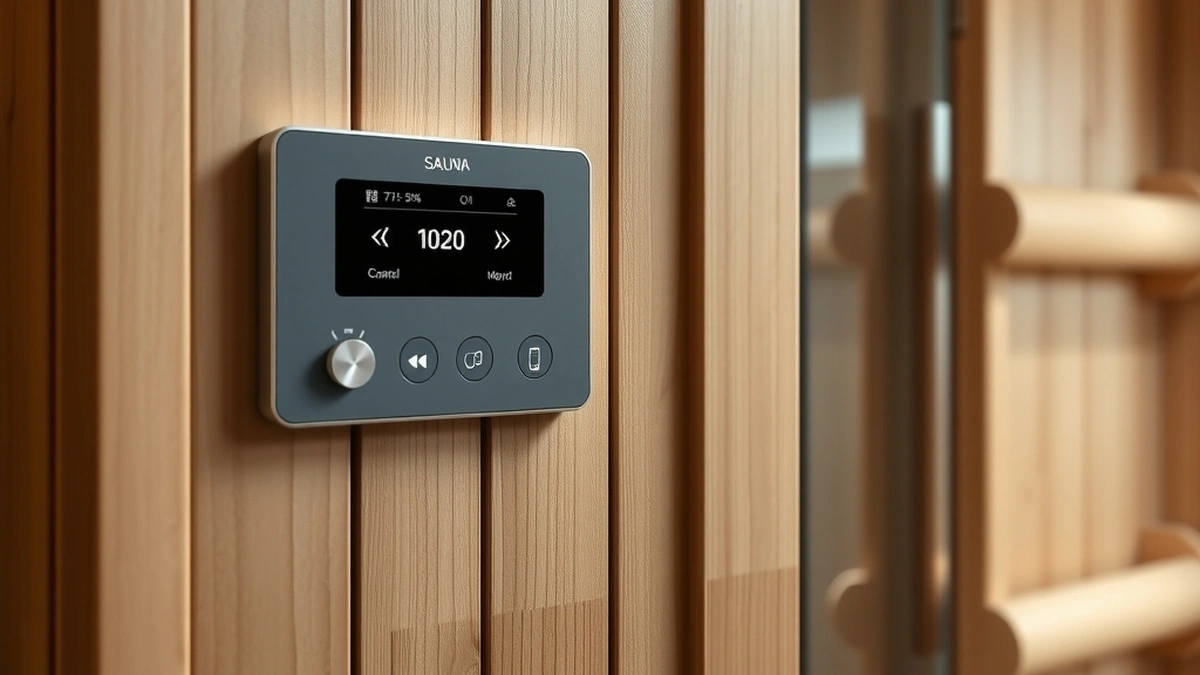
Digital controls use an electronic display and push-button interface. They often show actual temperature, target temperature, and remaining time. Some models allow you to program start times or set temperature limits. Digital controls typically cost $50 to $200 more than analog equivalents, depending on the brand and features.
Neither type heats the sauna faster. The heater’s kilowatt rating and the sauna’s insulation determine warm-up time, not the control interface.
Timers and Safety Limits
Most residential sauna timers have a maximum setting of 60 minutes. When the timer expires, the heater shuts off. Some controls include a high-temperature limit switch that cuts power if the sauna exceeds a safe operating temperature, as defined by the manufacturer.
Never bypass the timer or high-limit switch. If a control fails, replace it with the manufacturer’s specified part rather than wiring the heater to run continuously.
If you are planning a sauna project, check whether your jurisdiction requires permits for electrical work or accessory structures. Our guide to backyard sauna permits covers the typical approval process.
Estimated Operating Costs
Operating cost depends on heater size, electricity rate, and usage frequency. Use this formula:
Cost per hour = (heater kilowatts) × (electricity rate per kWh)
Example arithmetic:
- A 6 kW heater at $0.16 per kWh costs $0.96 per hour of run time (6 × 0.16 = 0.96).
- An 11 kW heater at $0.16 per kWh costs $1.76 per hour of run time (11 × 0.16 = 1.76).
If you run a 6 kW heater for three 45-minute sessions per week, that is 2.25 hours per week, or about 117 hours per year. At $0.16 per kWh, the annual estimate is roughly $112.32 (117 × 0.96 = 112.32). This is an estimate; actual costs vary by local utility rates and how long the heater cycles on versus maintaining temperature.
Choosing Controls with Your Heater
Controls are usually matched to the heater brand and model. A control designed for one manufacturer may not work with another, even if the voltage and wattage are similar. When replacing a control, order the part specified by the heater manufacturer.
If you are still selecting a heater, our overview of sauna heater options includes control compatibility notes for common residential models.
Controls do not affect how quickly a sauna reaches temperature, but they determine how easily you can manage the session. Choose a control rated for your heater’s voltage and amperage, mounted where you can reach it comfortably, and installed by someone qualified to handle 240V connections.
Frequently asked questions
What are sauna controls?
Sauna controls are the interface used to set temperature, session time, and heater power. They usually include a thermostat, timer, and on/off switch mounted outside the sauna room.
Where should sauna controls be mounted?
Controls are typically mounted outside the sauna room, about 5 to 6 feet above the floor, so the operator can adjust settings without entering the heated space.
Do sauna controls need a dedicated circuit?
Yes. Most residential sauna heaters require a dedicated 240V circuit with a breaker sized to the heater load, often 30 to 60 amps depending on kilowatt rating.
Can I install sauna controls myself?
Low-voltage control wiring may be straightforward, but line-voltage heater connections should be performed by a licensed electrician to meet local code and manufacturer requirements.
How long can a sauna timer run?
Many residential sauna timers max out at 60 minutes. Some commercial or aftermarket controls allow longer sessions, but the timer should match the heater manufacturer's specifications.
What is the difference between analog and digital controls?
Analog controls use dials and mechanical switches, while digital controls use electronic displays and programmable settings. Digital units often cost more but offer finer temperature resolution.
Sources
Some links are affiliate links.If you buy through them we may earn a commission at no extra cost to you. We do not accept payment for rankings. Read the full disclosure.