Sauna Door Options: Glass, Wood, and Hardware
A breakdown of sauna door types, sizes, materials, and installation considerations for backyard saunas.
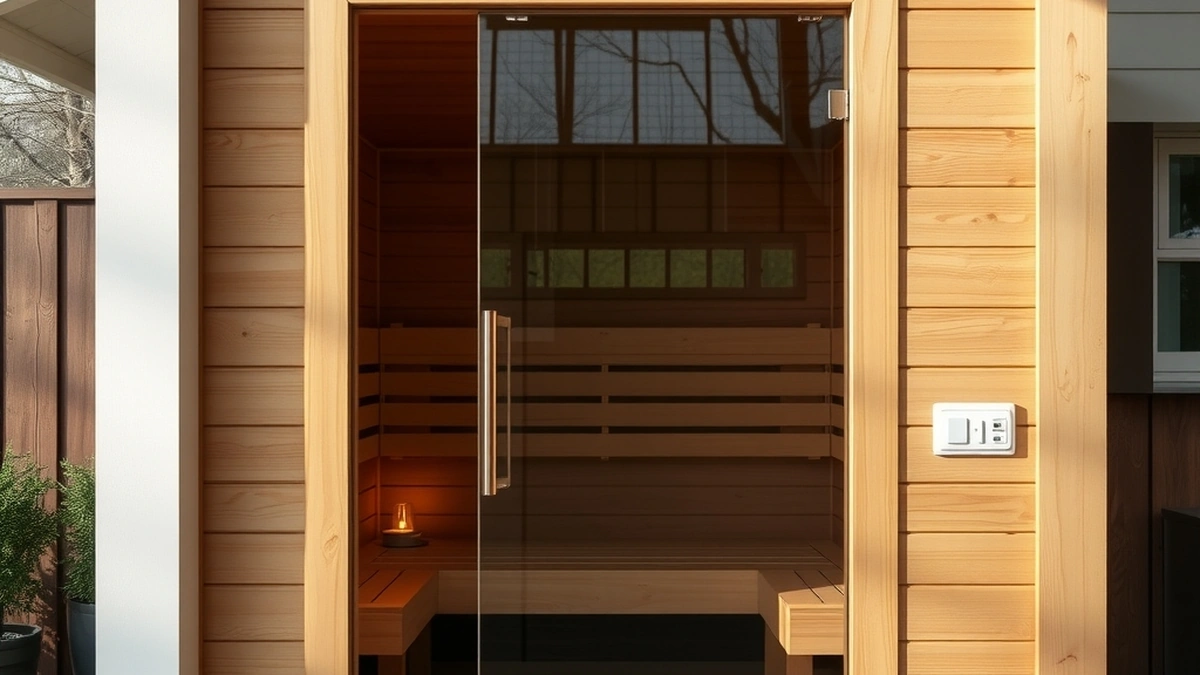
Sauna doors come in glass or wood, typically 22 to 36 inches wide, with frameless or framed glass being the most common choice for backyard saunas.
- Common door width
- 22–36 inches
- Common door height
- 72–80 inches
- Glass thickness
- 8–10 mm tempered
- Estimated door cost
- $200–$900 USD
- Hinges per door
- 2–3 heavy-duty
Some links on this page are affiliate links.If you buy through them we may earn a commission at no extra cost to you. We do not accept payment for rankings. Read the full disclosure.
Sauna door options fall into two main categories: tempered glass and solid wood. Glass doors are the most common choice for backyard saunas because they retain visibility and tolerate heat and humidity when properly specified. Wood doors match traditional cabin aesthetics but require careful sealing and hardware selection to avoid warping over time.
Door Types and Materials
Tempered glass doors dominate modern backyard sauna installations. The glass is typically 8 mm or 10 mm thick and framed in aluminum, stainless steel, or left frameless with minimal hardware. Frameless glass uses clips and hinges mounted directly to the glass, while framed glass includes a perimeter frame that adds rigidity and covers the glass edges.
Solid wood doors are usually made from cedar, hemlock, or another softwood compatible with sauna interiors. A wood door often includes a small glass viewport or no glass at all. Wood expands and contracts with temperature and humidity swings, so the door must be hung with clearance that accounts for seasonal movement.
Standard Sizes and Clearances
Most residential sauna doors measure between 22 and 36 inches wide and 72 to 80 inches tall. A 24-inch door is common for compact barrel saunas, while a 30- or 32-inch door suits larger cabin models. Door height should accommodate the tallest regular user with at least 2 inches of headroom above the door frame.
Clearance matters for both operation and safety. A sauna door typically opens outward into the changing area or yard. Outward swing prevents a person inside from being trapped if the door warps or if pressure equalizes slowly after a heating cycle. The door needs at least 30 inches of clear floor space in front of it to open fully without obstruction.
Glass Door Hardware
Glass doors rely on heavy-duty hardware to carry the weight of the panel. A 10 mm tempered glass door measuring 30 by 72 inches can weigh roughly 60 to 70 pounds before hardware. Most installations use two or three stainless steel hinges rated for the door weight, plus a magnetic or mechanical latch and a handle that stays cool to the touch.
Handle placement should be reachable from inside and outside. Vertical handles are common on glass doors, while wood doors often use lever or knob hardware mounted at standard height. All hardware exposed to the sauna interior should be stainless steel or another corrosion-resistant material; plated finishes can degrade in high humidity.
Cost Estimates
Sauna door prices vary by material, glass thickness, and whether the door is sold as part of a sauna kit or purchased separately. A basic 8 mm tempered glass door with aluminum frame typically ranges from $200 to $450 USD. A frameless 10 mm glass door with stainless steel hardware often costs $450 to $900 USD. Solid wood doors generally fall between $250 and $600 USD depending on species and size.
Installation labor, if not included in a sauna kit, can add $150 to $400 USD. For example, a $350 glass door plus $250 in labor equals $600 USD total. These figures are estimates and vary by region and supplier.
Frame and Frameless Comparison
Framed glass doors include a metal perimeter around the glass, which protects the edges and provides a mounting surface for hinges and locks. Framed doors tend to be more forgiving during installation because the frame absorbs minor alignment issues.
Frameless glass doors use minimal visible metal, usually just hinges and a handle. The aesthetic is cleaner, but the installation requires precise hole placement in the glass and tighter tolerances between the door and the frame opening. Frameless doors often cost more because the glass must be tempered and drilled before tempering, which limits post-production adjustments.
Wood Door Considerations
Wood doors suit cabin-style saunas and match interior wall paneling. Cedar is common because it resists moisture and has low thermal conductivity, meaning the door surface stays cooler than metal or glass. However, wood can swell in humidity and shrink in dry conditions, which may affect the seal over time.
A wood door should include a gasket or compression seal around the perimeter to limit heat loss. The gap between the door and the frame should be consistent but not so tight that swelling causes binding. A 1/8-inch gap around the latch side and top is typical, with a slightly larger gap at the bottom if floor clearance is needed.
Installation and Ventilation
The door opening must be framed to support the door weight and maintain a square plane. An out-of-square opening causes binding, air leaks, and premature hinge wear. Shimming during installation corrects minor wall irregularities.
Ventilation interacts with door choice. A sauna needs intake and exhaust vents to cycle air, and the door seal should not eliminate all airflow. If the door seals too tightly, pressure can make the door difficult to reopen immediately after a session. Most residential saunas rely on a combination of wall vents and a door gap rather than an airtight door.
Door selection also intersects with electrical planning. Sauna heaters and lighting require dedicated circuits, and door placement should not block access to the heater or control panel. For details on heater electrical requirements, see the sauna heater electrical FAQ at Redwood Outdoors. General electrical installation guidance follows NFPA 70, the National Electrical Code, available through the NFPA.
Choosing a Door for Your Sauna Style
Barrel saunas often ship with pre-hung glass doors sized to the curved wall, while cabin saunas offer more flexibility in door size and swing direction. If you are comparing sauna structures, the barrel versus cabin guide covers how shape affects door placement and interior layout. For product-focused research, the best barrel sauna roundup lists models with standard door configurations.
When selecting a door, match the glass thickness and hardware to the sauna’s intended use frequency. A sauna used daily benefits from heavier hinges and a 10 mm glass panel, while occasional use may suit an 8 mm framed door. Always confirm that the door opening in your sauna model matches the door you plan to install, and verify local permit requirements before beginning construction. Backyard sauna permits vary by municipality and can affect setbacks, electrical work, and structure classification.
Sources are rendered from frontmatter and include manufacturer and safety references.
Next, compare backyard sauna permits, barrel vs cabin sauna, best barrel sauna. before you commit.
Frequently asked questions
What are the main sauna door options?
The main sauna door options are tempered glass doors and solid wood doors, each available in framed or frameless configurations depending on the sauna style.
How wide should a sauna door be?
Most sauna doors range from 22 to 36 inches wide, with 24 to 30 inches being common for residential backyard saunas.
Does a sauna door need to open outward?
Sauna doors typically open outward for safety and to prevent pressure buildup inside the room when the door is closed.
What glass thickness is used for sauna doors?
Sauna glass doors usually use 8 mm or 10 mm tempered safety glass rated for high-temperature environments.
Can I use a standard interior door for a sauna?
Standard interior doors are generally not suitable because they are not designed for sustained heat, humidity, and thermal cycling.
How much does a sauna door cost?
A sauna door typically costs between $200 and $900 USD depending on glass thickness, frame material, hardware, and whether it is pre-hung.
Sources
Some links are affiliate links.If you buy through them we may earn a commission at no extra cost to you. We do not accept payment for rankings. Read the full disclosure.