Best barrel saunas for a backyard
Five barrel sauna picks by use case, plus how stave thickness, wood species, cradles, heaters, and delivery decide what a barrel is really worth.
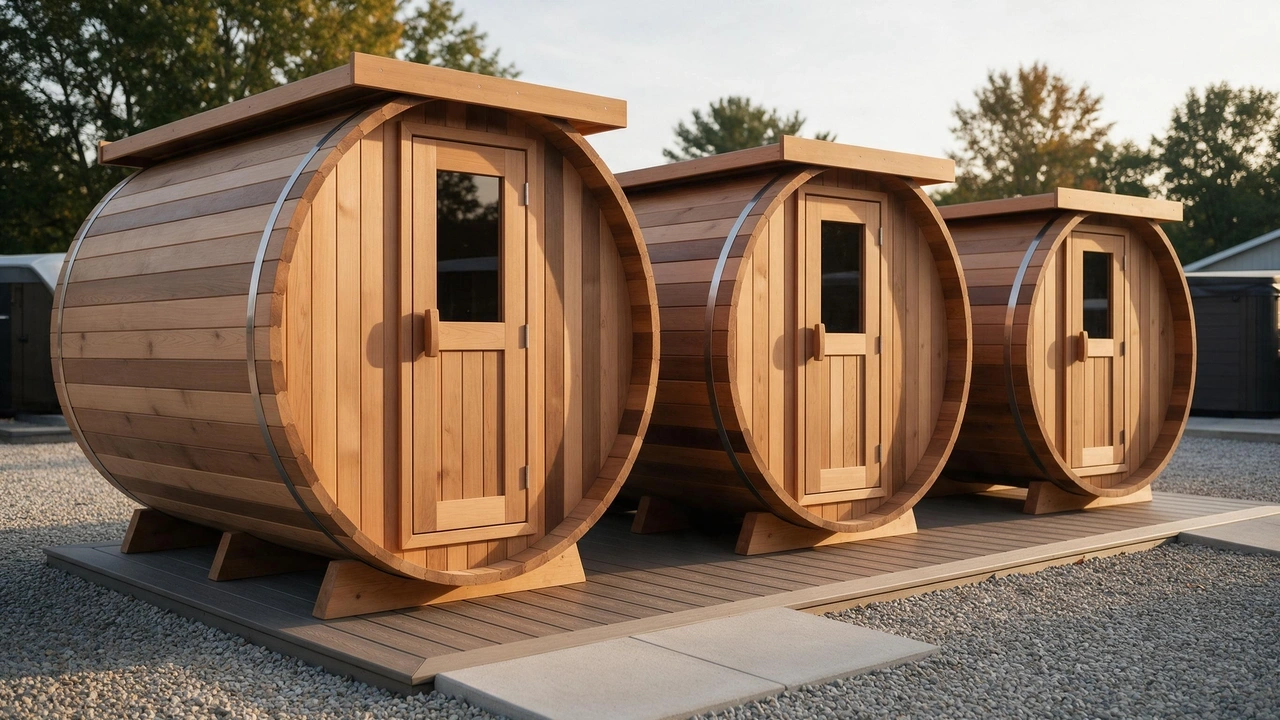
The best barrel sauna for most yards is a well-built 6-person model with 1.5-inch staves, two cradles, and a 6–8 kW heater. Buy smaller for a tight site; spend more on a canopy and thermo-treated wood for winter use.
- Best overall
- Redwood Extra-Wide 6-Person
- Best small yard
- Almost Heaven Watoga 2–4
- Best budget
- Almost Heaven Pinnacle 4
- Best cold climate
- Almost Heaven Magnus 6
- Best two-person
- Almost Heaven Salem 2
Some links on this page are affiliate links.If you buy through them we may earn a commission at no extra cost to you. We do not accept payment for rankings. Read the full disclosure.
A barrel sauna is a kit, a structure, and a heater wrapped in one purchase, and the spec sheet rarely tells you which part was cheap. These picks are organized by use case, not by a score. Every price below is a manufacturer list price at the time of writing; sales, heater upgrades, and options change them.
We have not tested these saunas in a lab or lived with them for a winter. The shortlist comes from manufacturer dimensions, wood specifications, heater ratings, published prices, and the failure points owners report: cradle contact, door fit, roof leaks, and heater clearance. Treat it as a list to verify, not a lab result.
How these picks were made
Three filters did most of the work. First, the barrel had to be a real outdoor structure with a rated roof and a cradle system, not a decorative shell. Second, the heater had to match the interior volume and come from a brand with US support. Third, the dimensions and weight had to be published, because a barrel that cannot reach the backyard is not a bargain.
That eliminated several cheap imports with vague specifications. It also kept four Almost Heaven models that are part of the Harvia group, alongside Redwood Outdoors. Both companies publish dimensions, heater options, and warranty terms, which is the minimum for a $5,000 purchase.
Stave thickness and wood species
Most barrel staves are 1.5 inches thick. The Magnus uses 1 9/16 inches. Thicker staves add mass, hold heat a little longer, and take screws better, but they also add weight. A thin stave with a bad cradle will fail before a thick stave with a good one.
Cedar is the default for a reason: it resists rot, smells like a sauna, and ages to gray. It is also soft, so it dents and scratches. Spruce, pine, and hemlock cost less; heat-treated hemlock is more stable than raw pine, and thermo-pine is darker and more dimensionally stable still.
The species is not a magic warranty. A 1.5-inch cedar barrel with a leaking roof and wet cradle will rot. A well-detailed spruce barrel on a drained pad can last decades.
The cradle, roof, and hardware
The cradle is where barrels fail. Two cradles are the minimum for a 6-person shell; the contact patch should be wide enough that the staves do not crush, and the barrel should sit without rocking. If the cradle holds water against the bottom course, rot starts there.
The roof matters almost as much. Asphalt shingles are common; a beveled roof kit or a canvas rain jacket sheds water and snow better. Stainless or coated fasteners matter in coastal air. The door threshold and sweep are the other weak point: a door that does not seal lets heat out and water in.
A $500 roof upgrade is cheaper than replacing the lower staves in five years. Budget for it.
Heater and electrical
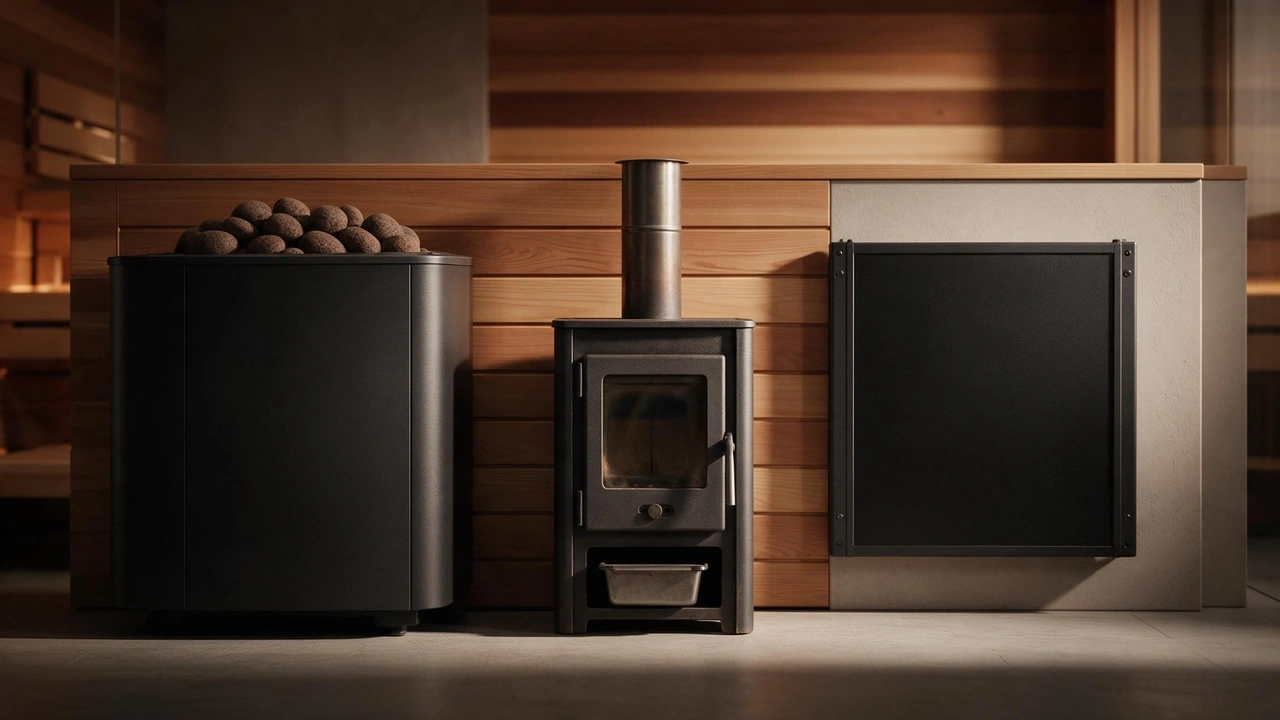
A 140–180 cubic foot barrel is comfortable with 6 kW. An 8 kW heater heats faster, recovers better in cold weather, and suits the larger 178-cubic-foot models. The heater must be hardwired at 240 volts on a dedicated circuit, usually 30 amps for 6 kW and 40 amps for 8 kW, with a disconnect in sight. The full table is in sauna electrical requirements.
Stones matter for steam quality. A 44-pound stone load is enough for a small barrel; 99 pounds or more gives softer, longer steam. Keep the heater guard if the bench is close, and follow the manufacturer’s clearance to combustible wood.
Delivery and assembly
Barrels ship curbside on a freight truck, usually in a crate that weighs 900–1,200 pounds. A liftgate gets it to the ground, not to the backyard. Measure the gate, the side yard, and the turn at the corner before you order.
Assembly is a long day for two people with basic tools. The panels are pre-cut; the work is lifting, aligning, and sealing. Site access is the hidden cost: a crane or a crew to move the crate can add several hundred dollars.
Five picks by use case
Best overall: Redwood Outdoors Extra-Wide 6-Person. The 7-foot diameter gives real headroom and a two-level bench layout that a standard barrel cannot match. It uses 1.5-inch heat-treated hemlock, measures 178.8 cubic feet inside, and includes a Harvia KIP 6 kW heater. At 1,190 pounds, it needs a proper base and a clear delivery path.
Best small yard: Almost Heaven Watoga 2–4. A compact cedar barrel that seats two comfortably and four tightly. It takes a smaller pad and a shorter sightline than a 6-person shell, and it can be ordered with a Harvia heater. If your yard is measured in feet rather than fractions of an acre, start here.
Best budget: Almost Heaven Pinnacle 4. The 6 x 6 foot footprint keeps the price near $5,300 while offering four seats. That is the lowest cost per seat in this group. The trade-off is a short interior; tall bathers should sit before they buy.
Best cold climate: Almost Heaven Magnus 6. Thermally modified Nordic pine, 1 9/16-inch staves, a canopy over the door, and a choice of 8 kW Harvia electric or wood-burning heat. The canopy keeps snow off the entry and gives you a dry place to cool down. It is the most expensive pick here, and the one most likely to be used in February.
Best two-person: Almost Heaven Salem 2. A true two-person barrel at the lowest entry price, with cedar staves and a 6 kW KIP heater. It is small, simple, and easy to heat. If most sessions are solo or a couple, the extra seats on a bigger barrel are mostly empty volume.
What the price difference buys
The gap from $4,485 to $11,591 buys four things: diameter and bench layout, a better shell (thermo-treated wood, thicker staves, canopy), a bigger heater, and the option to burn wood. It does not buy a fundamentally different kind of heat. A $4,500 barrel and an $11,000 barrel both reach 180°F; the expensive one gets there with more room, better weather protection, and fewer compromises.
Spend on the shell and the heater before the porch, the glass, or the accessories. Those are the parts that are expensive to change later.
What to ignore
- Seat counts. A “6-person” barrel is comfortable for four. A “4-person” is comfortable for two or three.
- Health claims. Barrels do not detoxify you or cure anything. Buy one for relaxation, not treatment.
- BTU or kW without volume. A heater rating only means something against the room’s cubic feet and insulation.
- “Free shipping.” Curbside freight is not backyard delivery. Ask what the crate weighs and who moves it.
- Lifetime warranties. Read the exclusions for rot, cradle wear, and commercial use.
The short version
Buy the smallest barrel that fits the people who will actually sit in it. Insist on 1.5-inch staves, two cradles, a real roof, and a heater rated for the volume. Put it on a drained, level base, and budget for the electrical circuit before you fall in love with a model.
If you are still deciding between shapes, read barrel vs cabin sauna. If the base is the open question, sauna foundation options covers the four types and what they cost.
Our top picks
- + 7 ft diameter with two-level benches
- + 1.5 in heat-treated hemlock staves
- + Harvia KIP 6 kW heater included
- + 178.8 cu ft interior
- − 1,190 lb empty
- − Needs a solid, level pad
- − Premium price
- + Compact 2–4 person footprint
- + Cedar staves
- + Harvia heater options
- + Easy to site on a small lot
- − Tight for four adults
- − Accessories add up
- + 6 x 6 ft footprint
- + Four seats at a low cost per seat
- + Cedar staves
- + Harvia heater
- − Short 6 ft length
- − Fewer layout options
- + Thermally modified Nordic pine
- + 1 9/16 in staves
- + Canopy over the door
- + 8 kW Harvia or wood-burning option
- − Highest price here
- − Large 88 x 96 in footprint
- − Heavy
- + True two-person barrel
- + Lowest entry price
- + Cedar staves
- + 6 kW KIP heater included
- − One bench
- − Limited room to change
Frequently asked questions
How long does a barrel sauna last?
A cedar or heat-treated barrel with a roof, a drained base, and annual inspection of the lower staves should typically last 15–25 years. The cradle and the bottom course fail first, so keep them dry and replace rotten staves early.
Is cedar better than spruce for a barrel sauna?
Cedar resists rot and smells better; spruce and pine cost less but can check and need more maintenance. Heat-treated hemlock and thermo-pine are good middle options. Thickness and construction matter more than the species name.
What size heater does a barrel sauna need?
A 6 kW heater suits most 140–180 cu ft barrels; an 8 kW unit heats faster and handles cold climates and larger volumes. Check the heater's own room-volume rating and the circuit requirements before you buy.
Can a barrel sauna sit on gravel?
Yes, if the gravel is 4–6 inches of compacted crushed stone over filter fabric, level within about 1/8 inch over 8 feet, and drained away from the sauna. A loose gravel pile will settle and twist the cradle.
How much does a barrel sauna cost installed?
The sauna kit typically runs $4,500–$12,000. Add $300–$2,800 for the base, $600–$1,500 for the electrical circuit, and $0–$2,000 for delivery or assembly help. Prices vary by model, heater, and site.
Do barrel saunas work in winter?
Yes, with a larger heater, insulation where the model allows it, a roof or rain jacket, and a clear path to the door. A barrel loses heat faster than a cabin, so an 8 kW heater is common in cold climates.
Sources
Some links are affiliate links.If you buy through them we may earn a commission at no extra cost to you. We do not accept payment for rankings. Read the full disclosure.