Best sauna heaters: electric, wood, and infrared
How to size a sauna heater by room volume and insulation, with electric, wood-burning, and infrared options, a kW table, and four real picks.
Size a sauna heater by room volume and insulation, not brand. A well-insulated 150–210 cu ft room needs about 6 kW, 210–300 needs 8 kW, and 300–425 needs 9 kW. Add 20–30% for uninsulated walls or heavy glass.
- Small room
- 3–4.5 kW
- Typical cabin
- 6 kW
- Large or glassy
- 8–9 kW
- Wood stove
- Harvia M3: 212–459 cu ft
- Circuit
- 240 V, 30–50 A
Some links on this page are affiliate links.If you buy through them we may earn a commission at no extra cost to you. We do not accept payment for rankings. Read the full disclosure.
The heater is the one part of a sauna that has to be right on the first try. A heater that is too small runs all evening and never reaches temperature; one that is too large short-cycles, scorches the benches, and may not fit the circuit you have. Size it from the room, then choose the brand.
We have not bench-tested these heaters. The picks rest on manufacturer room-volume ratings, electrical specifications, stone capacity, and the controls that come in the box. Prices are US list or kit prices at the time of writing and vary by retailer, so check the current figure before you buy.
Size the room, then the heater
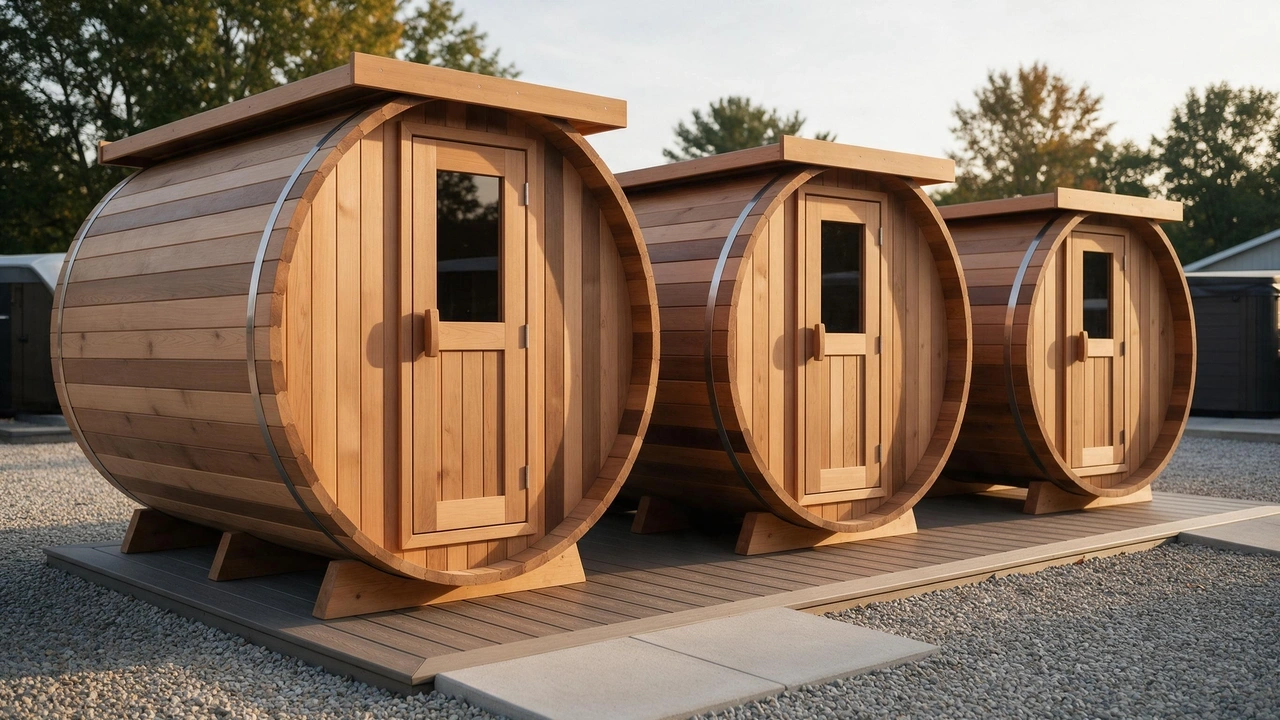
Start with cubic feet: width × depth × height. A 5 x 7 ft cabin with a 7 ft ceiling is 245 cubic feet. A 6 x 8 ft cabin is 336. A Redwood 6-person barrel is 140 cubic feet inside, which is why a 6 kW heater is the default for that shell.
Then adjust for the enclosure. A well-insulated cabin with a normal glass door can use the lower end of a heater’s range. Uninsulated walls, single-pane glass, an open ceiling, or a cold climate push you up 20–30%. A 200-cubic-foot room with a large glass wall and no insulation behaves more like 260 cubic feet.
The sizing table, with caveats
| Room volume | Heater size | Typical circuit |
|---|---|---|
| Up to 150 cu ft | 3–4.5 kW | 240 V, 20–30 A |
| 150–210 cu ft | 6 kW | 240 V, 30 A |
| 210–300 cu ft | 8 kW | 240 V, 40 A |
| 300–425 cu ft | 9 kW | 240 V, 50 A |
| 425 cu ft and up | 10.5 kW or two heaters | 240 V, 50–60 A |
The table is a planning aid, not a code. Manufacturer ratings differ, and the heater’s own room-volume range always wins. If your calculation lands between two sizes, choose the larger one for a cold climate or a glass-heavy room, and the smaller one for a mild climate and a tight, insulated cabin.
Electric heaters: 3 to 9 kW
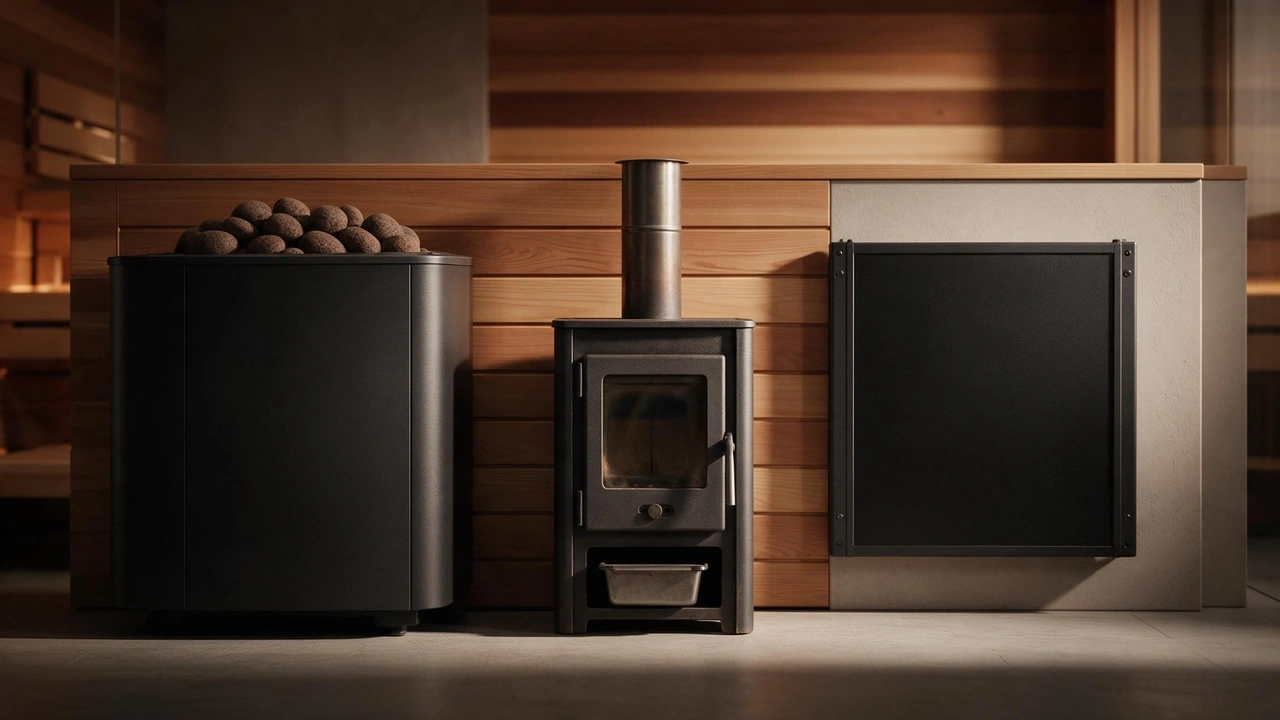
Electric is the default for a backyard sauna because it is clean, controllable, and does not need a chimney. Residential units are 240-volt, single-phase, and hardwired.
The math is amps equals watts divided by volts. A 3 kW heater draws 12.5 amps and runs on a 20-amp breaker. A 4.5 kW unit draws 18.8 amps and usually needs 25–30 amps. A 6 kW heater draws 25 amps on a 30-amp breaker with 10-gauge copper. An 8 kW unit draws 33.3 amps on a 40-amp breaker with 8-gauge wire. A 9 kW unit draws 37.5 amps on a 50-amp breaker with 6-gauge wire.
Every one of those circuits needs a disconnect within sight of the heater and a permit in most jurisdictions. The full wire and breaker table is in sauna electrical requirements.
Wood-burning stoves: chimney, clearance, insurance
A wood stove is the right answer for an off-grid cabin, a property with unreliable power, or someone who wants the fire ritual. It is also more work: fuel, ash, chimney cleaning, and a fire that takes 45–90 minutes to bring the room up to temperature.
The Harvia M3 is rated for 212–459 cubic feet and produces roughly 16 kW, which suits a medium cabin rather than a 140-cubic-foot barrel. It needs a listed insulated chimney, a roof penetration with the correct clearances, a spark arrestor, floor protection, and a fresh-air intake. Clearances to combustible walls are measured from the stove body and the chimney, not from a heat shield you improvised.
Call your insurer before you order. Some homeowner policies require a professional installation and an inspection; others exclude solid-fuel appliances entirely. A wood stove is also a carbon monoxide source, so a CO alarm belongs in the building.
Infrared panels are a different purchase
Infrared panels are sometimes sold as “sauna heaters,” but they are a different product. They draw 1.5–2 kW, often run on 120 volts, and warm people and surfaces while the air stays at 110–140°F. They produce no steam and hold no stones.
That can be a good product for an indoor room with a small electrical panel. It is not a substitute for a 6 kW traditional heater in a 200-cubic-foot cabin. If you want 180°F air and löyly, buy a traditional heater and size the circuit for it.
Controls, stones, and safety
Controls range from built-in dials to wall panels to Wi-Fi. A built-in delay timer is underrated: it lets you start the heater an hour before you use it without leaving it on all day. Wi-Fi adds scheduling and remote shutoff, but it also adds a control board that can fail.
Stones should be 2–4 inches, rated for sauna use, and stacked loosely so air can move. Leave the top layer slightly domed. Restack and inspect them once a year; cracked stones reduce steam quality and can damage the element.
Safety is mostly clearance and supervision. Keep towels, buckets, and clothing off the heater. Respect the manufacturer’s clearance to combustible walls and benches. Use a heater guard if the bench is within reach. Never leave a wood stove burning unattended.
Four picks by job
Best value for a small or medium room: Harvia KIP 6 kW. A workhorse wall heater with built-in dials, an 8-hour delay, and a 44-pound stone load. It suits a 150–210 cubic foot cabin and keeps the circuit at 30 amps. Around $1,214 for the heater.
Best for most cabins: Harvia Spirit 8 kW. The 8 kW rating covers 177–431 cubic feet, which handles a 6 x 8 cabin with margin. The kit includes the Wi-Fi Fenix control and a 99-pound stone capacity. Around $3,291 as a kit.
Best for a large or high-use sauna: Harvia Virta 8 kW. A floor-standing pillar with 132 pounds of stones and the same 177–431 cubic foot rating. It holds heat well between sessions and suits a family that uses the sauna most days. Around $3,371 as a kit.
Best wood-fired: Harvia M3. A classic cast-iron stove with a glass door, rated for 212–459 cubic feet, and available with a pipe water heater. Around $1,093 for the stove; the chimney and installation are extra.
Mistakes that cost the most
- Buying by brand before volume. A premium 6 kW heater in a 350-cubic-foot room is still the wrong heater.
- Oversizing. Short cycling, scorched wood, and a circuit you did not budget for.
- Undersizing. The elements run constantly, the room never reaches temperature, and the heater wears out early.
- Ignoring glass. A large single-pane window can add the equivalent of 30–50 cubic feet of load.
- Forgetting the panel. A 9 kW heater may require a service upgrade that costs more than the heater.
- Skipping the permit. An unpermitted 240-volt circuit is a problem at inspection, insurance, and resale.
The short version
Measure the room in cubic feet, add 20–30% for poor insulation or heavy glass, and pick a heater whose published range covers the result. Then size the circuit from the nameplate and hire a licensed electrician for the connection. The brand matters less than the match between heater, room, and wire.
If you are still choosing between a barrel and a cabin, barrel vs cabin sauna explains how the shell changes the heater load. For the monthly bill, sauna running cost runs the arithmetic.
Our top picks
- + 6 kW at 240 V, UL listed
- + Built-in dials and 8-hour delay timer
- + 44 lb stone capacity
- + Simple, widely supported design
- − No Wi-Fi
- − Manual controls only
- + 8 kW, rated for 177–431 cu ft
- + Wi-Fi Fenix control in the kit
- + 99 lb stone capacity
- + Slim wall-mounted profile
- − Needs a 40 A circuit
- − Higher price than a bare KIP
- + 8 kW, rated for 177–431 cu ft
- + 132 lb stone capacity
- + Floor-standing pillar with a small footprint
- + Wi-Fi control in the kit
- − Heavier than a wall unit
- − Takes floor space near the bench
- + No electricity required
- + Rated for 212–459 cu ft
- + Glass fire door
- + Optional pipe water heater
- − Chimney and clearance work
- − Insurance and permit questions
- − Manual fuel and ash
Frequently asked questions
What size heater do I need for a 6 x 8 sauna?
A 6 x 8 ft room with a 7 ft ceiling is 336 cubic feet. That points to a 9 kW heater for a well-insulated room, or an 8 kW unit if the walls and ceiling are well insulated and the glass area is small.
Is it bad to oversize a sauna heater?
Yes. An oversized heater short-cycles, overshoots the set temperature, and can scorch benches and wood near the element. It also costs more to buy and may need a larger circuit than the panel can supply.
Can I use a wood-burning stove in a backyard sauna?
Often yes, but it needs a listed chimney, clearance to combustibles, floor protection, and a fresh-air supply. Check the local code and your insurance policy before you buy; some insurers require a professional installation.
Do sauna heaters need a dedicated circuit?
Yes. A 3–9 kW electric heater is hardwired at 240 volts on its own circuit, with a breaker sized to the nameplate and a disconnect within sight. A licensed electrician and an electrical permit are standard.
How many stones should a sauna heater hold?
Small wall heaters hold about 44 pounds; larger pillar heaters hold 99–132 pounds. More stone gives softer, longer steam, but it also takes longer to heat. Follow the manufacturer's stone size and stacking instructions.
Are infrared panels a replacement for a traditional heater?
No. Infrared panels warm people and surfaces at a lower air temperature and produce no steam. If you want a 160–200°F room and löyly, you need a traditional electric or wood-burning heater with stones.
Sources
Some links are affiliate links.If you buy through them we may earn a commission at no extra cost to you. We do not accept payment for rankings. Read the full disclosure.