Best cold plunge chillers for home tubs
How to match a chiller to gallons and target temperature, with four picks by use case, plus aquarium-versus-plunge trade-offs, noise, and fittings.
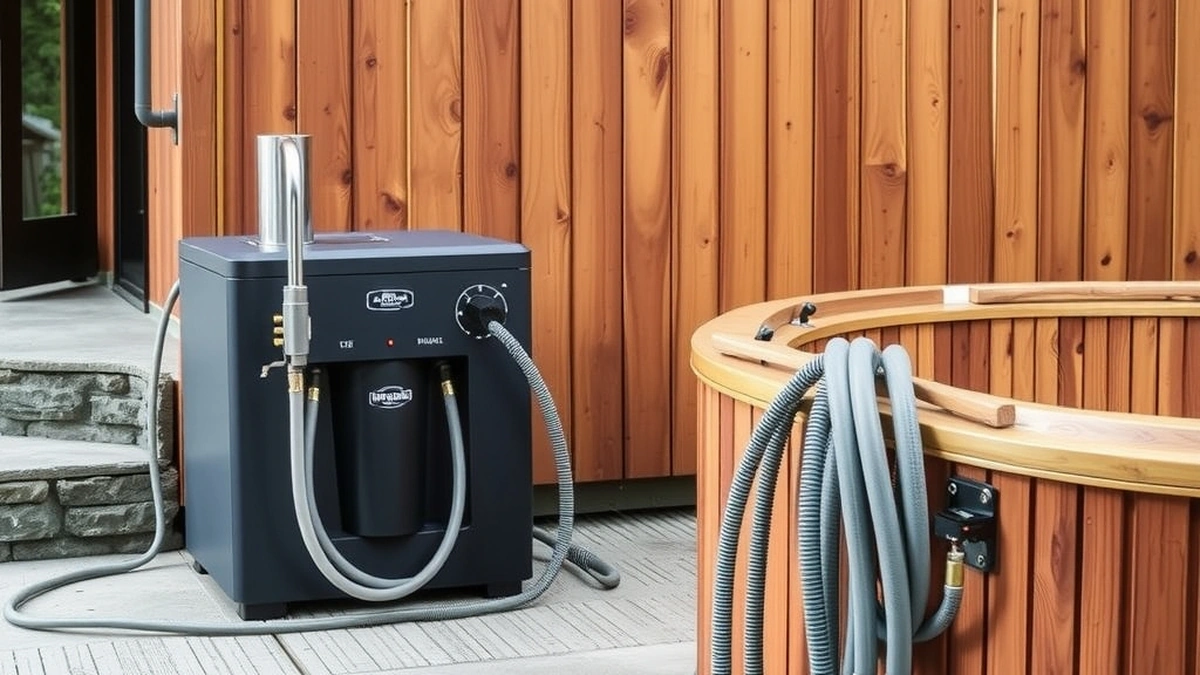
A 100-gallon tub at 45°F usually needs a 1/2 HP chiller rated 4,000–5,000 BTU/h. Choose a plunge-specific unit for outdoor duty and integrated filtration; an aquarium chiller suits a small indoor tub.
- Best overall
- Penguin Chillers 1/2 HP — $999.99
- Best budget
- Active Aqua 1/2 HP — from $869
- Best small tub
- JBJ Arctica 1/3 HP — from $1,100
- Best plunge-specific
- Polar Monkeys ChillX — $6,890
Some links on this page are affiliate links.If you buy through them we may earn a commission at no extra cost to you. We do not accept payment for rankings. Read the full disclosure.
A 100-gallon cold plunge held at 45°F usually needs a 1/2 HP chiller rated around 4,000–5,000 BTU/h. That is a starting point, not a specification. The right match depends on the target temperature, the heat the tub gains from the room, and how quickly you want the water back to setpoint after a session.
A cold plunge chiller is a compressor-driven heat pump that removes heat from the tub water and rejects it into the surrounding air.
Match the chiller to gallons and target temperature
The arithmetic is simple. One gallon of water weighs 8.34 pounds, and moving one pound by 1°F takes 1 BTU. A 100-gallon tub dropping from 65°F tap water to 45°F gives up 100 × 8.34 × 20, or 16,680 BTU. Spread that over 12 hours and the chiller must remove about 1,390 BTU/h. Over 24 hours, about 695 BTU/h.
Those numbers describe pull-down only. A tub also gains heat through its walls, lid, and plumbing, and it gains a burst of heat every time a body gets in. That is why a 100-gallon tub is usually paired with a 4,000–5,000 BTU/h unit rather than a 1,500 BTU/h one. The extra capacity handles ambient gain and recovery without running continuously.
| Water volume | Typical chiller | Rated capacity | Notes |
|---|---|---|---|
| 50–70 gal | 1/4 HP | 2,500–3,500 BTU/h | Small indoor tubs |
| 80–110 gal | 1/2 HP | 4,000–5,000 BTU/h | The common home size |
| 120–180 gal | 3/4–1 HP | 6,000–9,000 BTU/h | Garage or outdoor tubs |
| 200 gal and up | 1 HP+ | 10,000 BTU/h+ | Pair units or go commercial |
The capacity numbers are nominal and usually quoted at a warmer water temperature than you plan to hold. A chiller rated at 78°F will remove less heat at 45°F. Ask for the rating at your target temperature, or leave a generous margin.
Aquarium versus plunge-specific units
Both types use the same refrigeration cycle. The difference is the package around it.
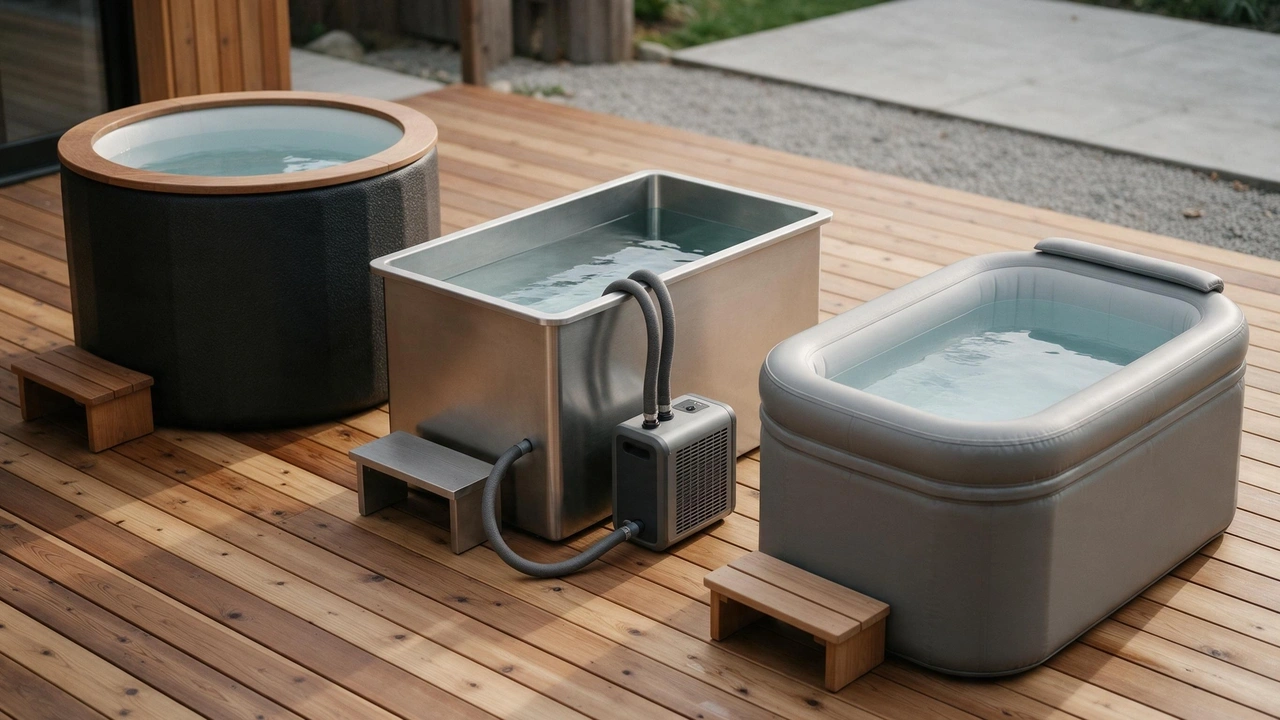
An aquarium chiller has a titanium heat exchanger, a controller, and a cabinet meant to sit indoors. It usually needs a separate pump and filter, it is rated at aquarium temperatures, and its warranty is often one year. It is the cheapest way to add cooling to a small tub.
A plunge-specific chiller adds a weather-resistant enclosure, integrated filtration, ozone or UV, a controller designed for cold setpoints, and sometimes heating. It costs several times more, but it replaces three or four separate components and is built for daily use beside a wet tub.
For a tub in a garage or covered patio, an aquarium unit can last years if it stays dry. For an outdoor tub in full sun, the enclosure and filtration integration are worth the money.
Noise, duty cycle, and fittings
A chiller is a compressor and a fan, so it makes noise. Most home units land between 45 and 60 dB at a few feet — quieter than a window air conditioner, louder than a refrigerator. The fan side needs clearance, and the compressor vibrates through hard surfaces. Set the unit on a rubber pad and keep it off the wall.
Duty cycle tells you whether the size is right. In summer, a correctly sized chiller may run half the day or more. In a cool garage, it may run a few hours. A unit that never shuts off is undersized or blocked. One that starts and stops every minute is short-cycling and will not last.
Fittings matter more than buyers expect. Most inline units use 1/2, 5/8, or 3/4-inch barbs. Match the chiller’s inlet and outlet, keep the hose run short, and do not neck a high-flow unit down to 3/8-inch garden hose. Check the minimum and maximum flow in gallons per hour before you buy the pump.
Four picks by use case
Best overall: Penguin Chillers 1/2 HP. Five thousand BTU/h and a straightforward inline design for $999.99. It is the unit most often recommended in owner forums for a 100-gallon tub because it has enough capacity to recover after a session without running flat out. You supply the pump, filter, and hoses, and you need to keep it dry and ventilated.
Best budget: Active Aqua 1/2 HP. A hydroponic chiller rated at 4,020 BTU/h and 90–172 gallons, with a titanium evaporator and a boost mode. Street price is around $869, which makes it the cheapest credible option here. The controller is made for reservoirs, not plunge tubs, and the unit is not weatherproof. Put it indoors or under a dry cover.
Best small tub: JBJ Arctica 1/3 HP. Four thousand BTU/h in an 18.5-inch cube that weighs 61 pounds. The titanium exchanger and compact cabinet suit a 50–80 gallon tub in a garage or basement. It is an aquarium unit with a one-year warranty, and it needs a separate pump and filter. It is also the least weather-tolerant pick here.
Best plunge-specific: Polar Monkeys ChillX. A 1.0 HP unit that cools to 32°F, heats to 107°F, and includes filtration, ozone, ice making, and app control. At $6,890 it costs more than most tubs, but it replaces the chiller, filter, ozone generator, and heater in one cabinet. It is overkill for a 70-gallon tub and the right answer for a large outdoor system with a matching budget.
Installation and electrical
Most 1/2 HP chillers run on a standard 120-volt, 15-amp circuit. That does not mean any outlet will do: the circuit should be dedicated, GFCI-protected, and sized to the nameplate. Larger units may need 20 amps or 240 volts. Use a licensed electrician and follow local code, especially outdoors.
Plan for condensate. A chiller pulls moisture out of the air and drips it, so it needs a drain path or a pan. Leave the fan side open, and do not box the unit into a cabinet. If the tub sits outdoors in freezing weather, drain the chiller and hoses for the season or use a unit rated for it.
What the price difference buys
The gap from about $869 to $6,890 is not a gap in water temperature. A $869 aquarium chiller and a $6,890 plunge chiller can both hold 45°F. The money buys a weatherproof enclosure, integrated filtration and sanitation, a controller built for the application, a longer warranty, and one company to call when something leaks.
Running cost is separate. A 500-watt chiller running 12 hours a day uses 6 kWh. At 18¢ per kWh, that is $1.08 a day, or about $32 a month. A hot garage can double the run time. Cold plunge electricity cost has the full arithmetic, and cold plunge chiller sizing explains the BTU load in more detail.
The short version
Size for 100 gallons with a 1/2 HP, 4,000–5,000 BTU/h unit, then choose the package. Penguin is the value default, Active Aqua is the budget pick if the unit stays dry, JBJ is the compact choice for a small indoor tub, and ChillX is the integrated answer when the budget allows. Buy the chiller before the tub if you can; it is the part that decides whether the tub is a daily habit or a very cold bucket. If the tub is still open, best cold plunge tubs covers the models these units pair with.
Our top picks
- + 5,000 BTU/h at 1/2 HP
- + Simple inline design
- + Rated for reef, hydroponic, and cold therapy use
- + Widely used on home cold plunges
- − Pump and filter sold separately
- − Not a weatherproof plunge cabinet
- − Needs adequate ventilation
- + 4,020 BTU/h with power boost
- + Rated for 90–172 gallon reservoirs
- + Titanium evaporator
- + Low entry price
- − Hydroponic controls, not plunge controls
- − Indoor use only
- − No filtration or pump included
- + 4,000 BTU/h in an 18.5 in cube
- + Compact aquarium-grade cabinet
- + Titanium heat exchanger
- + 115 V, 480–2,420 gph flow range
- − Aquarium unit, not weatherproof
- − One-year warranty
- − Needs a separate pump and filter
- + 1.0 HP cooling and heating
- + Cools to 32°F and heats to 107°F
- + Built-in filtration and ozone
- + App control and ice making
- − Highest price here
- − Sold as a separate unit through Polar Monkeys
- − More capacity than a small tub needs
Frequently asked questions
What size chiller do I need for a 100-gallon cold plunge?
A 1/2 HP unit rated 4,000–5,000 BTU/h is the usual match. The calculated pull-down load for a 20°F drop is about 1,400 BTU/h over 12 hours, but ambient gain and recovery after a session can double the working load. The extra capacity keeps the compressor from running nonstop.
Can I use an aquarium chiller for a cold plunge?
Yes for a small indoor tub with a separate pump and filter. Aquarium chillers are often rated at 78°F water, so their capacity at 45°F is lower than the headline number, and most cabinets are not weatherproof. Keep the unit dry and ventilated.
How noisy is a cold plunge chiller?
Most home units run in the 45–60 dB range at a few feet, which is quieter than a window air conditioner and louder than a refrigerator. Vibration travels through hard floors, so set the unit on a pad and keep it off the wall. Do not put it behind a bedroom headboard.
Should the chiller run all the time?
Leave the chiller powered and let its thermostat cycle the compressor. It should run a good part of the day in summer and less in a cool garage. A unit that never shuts off is undersized or starved of airflow; one that starts and stops every minute is short-cycling.
What fittings does a cold plunge chiller use?
Most inline units use 1/2, 5/8, or 3/4-inch hose barbs. Match the chiller's inlet and outlet, keep hose runs short, and avoid 3/8-inch garden hose on a unit rated for high flow. Check the minimum and maximum gallons per hour before you plumb it.
Do I need an electrician for a chiller?
A plug-in 1/2 HP unit on a dedicated 120-volt, 15-amp GFCI circuit is usually a simple install, but the circuit should be dedicated and protected. Larger units may need 20 amps or 240 volts. Use a licensed electrician and follow local code.
Sources
Some links are affiliate links.If you buy through them we may earn a commission at no extra cost to you. We do not accept payment for rankings. Read the full disclosure.