What a cold plunge costs in 2026
Cold plunge costs by tier: a tub alone $80–$300, a tub with a chiller $1,500–$6,000, a DIY freezer build $400–$1,200, and premium systems from $5,000.
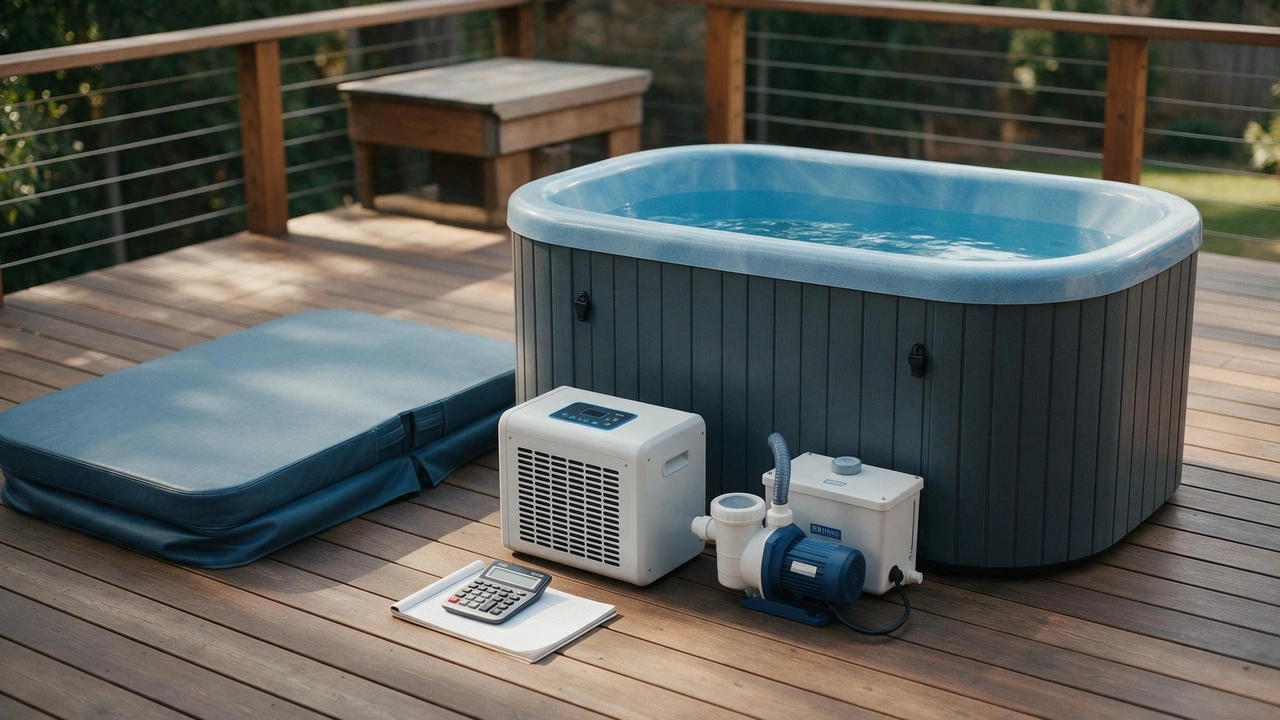
A cold plunge costs $80–$300 as a tub you fill with ice, $1,500–$6,000 with a chiller, $400–$1,200 as a DIY chest freezer build, and $5,000–$15,000 as a premium system. The chiller is 50–65% of any chilled setup.
- Tub only
- $80–$300
- Tub and chiller
- $1,500–$6,000
- DIY freezer
- $400–$1,200
- Premium system
- $5,000–$15,000
- Largest line
- Chiller, 50–65% of a chilled build
Some links on this page are affiliate links.If you buy through them we may earn a commission at no extra cost to you. We do not accept payment for rankings. Read the full disclosure.
| Tub only | Tub and chiller | |
|---|---|---|
| Up-front cost | $80–$300 | $1,500–$6,000 |
| Temperature | Whatever the tap and ice give you | Held at a setpoint, ±1–2°F |
| Water care | Drain after every session | Filtered and sanitized, tested weekly |
| Daily effort | Buy ice, haul, dump, drain | Lift the lid |
| Power needed | None | 120 V, sometimes 240 V |
| Best for | Trying the habit, renters | Daily use at a fixed location |
A cold plunge costs $80–$300 if you buy a tub and add ice, $1,500–$6,000 if you add a chiller, $400–$1,200 if you build one from a chest freezer, and $5,000–$15,000 if you buy a premium integrated system. The tub is never the expensive part.
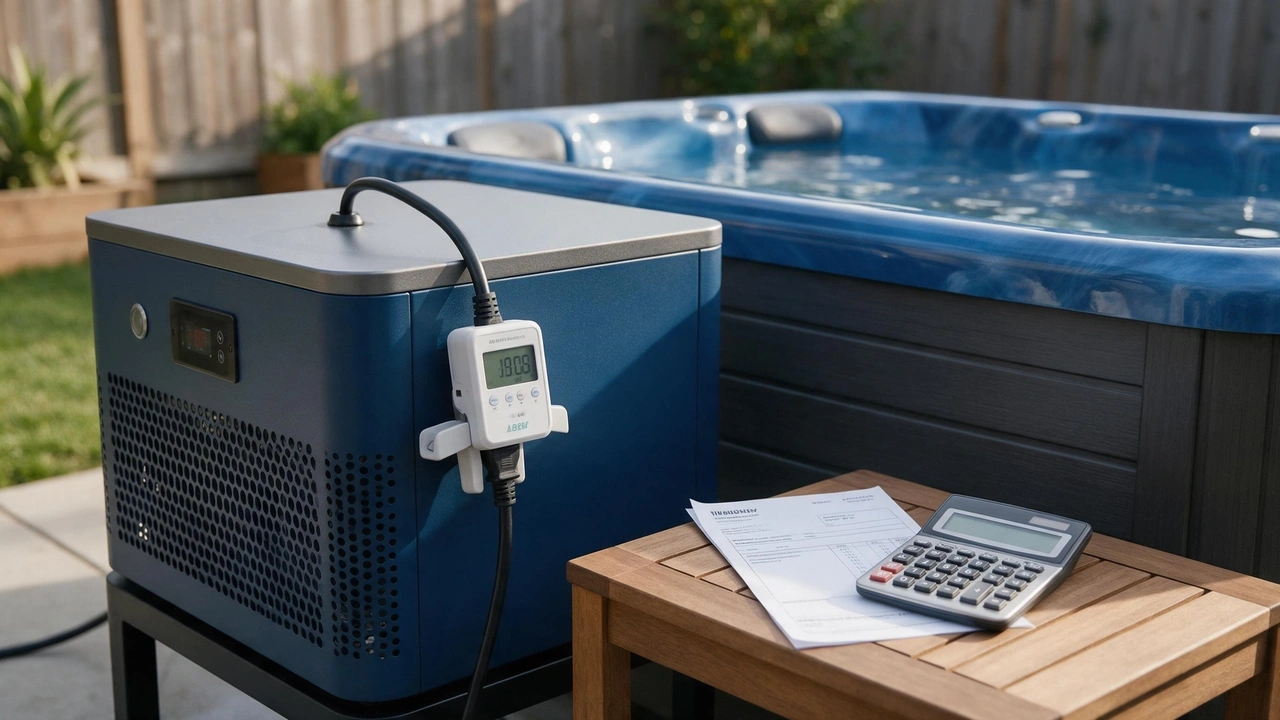
The expensive part is the refrigeration. A chiller is a compressor, a heat exchanger, a pump, and a controller, and it typically accounts for half to two-thirds of a complete setup. Price the chiller first and the tub around it.
Four ways to buy a cold plunge
The four routes are not quality tiers so much as different products:
- Tub only. A stock tank, an inflatable, or a cedar tub that you fill and ice.
- Tub and chiller. A complete system with refrigeration, circulation, and filtration.
- DIY freezer. A chest freezer sealed and fitted with a pump and filter.
- Premium. An integrated acrylic or cedar tub with a heat pump, ozone or UV, and a cover.
Each has a different cost structure, and the cheapest to buy is the most expensive to run.
The numbers by tier
| Line item | Tub only | Tub + chiller | DIY freezer | Premium |
|---|---|---|---|---|
| Tub or freezer | $80–$300 | $300–$1,500 | $180–$500 | $2,500–$6,000 |
| Chiller or refrigeration | — | $900–$3,200 | — | $2,000–$5,000 |
| Pump and filter | — | $100–$400 | $50–$200 | $300–$800 |
| Liner and sealant | — | — | $40–$100 | — |
| Plumbing and fittings | — | $50–$250 | $30–$100 | included |
| Cover | included | $50–$200 | $25–$80 | $150–$400 |
| Electrical | — | $0–$300 | $0–$120 | $300–$1,200 |
| Delivery and setup | — | $0–$500 | $25–$80 | $500–$1,800 |
| Total | $80–$300 | $1,500–$6,000 | $400–$1,200 | $5,000–$15,000 |
The columns are independent ranges. A tub-and-chiller build at the top of every line lands near $6,350, which is why the $6,000 ceiling assumes a mid-size chiller rather than the largest one. A DIY build at the bottom of every line lands near $350 before the first filter cartridge.
Tub only: $80–$300
At this tier you are buying a vessel, not a system. A 100-gallon galvanized stock tank is $150–$300 and will outlast most inflatables. A folding or inflatable tub is $80–$150 and packs away, which matters in a rental.
The purchase price is the small number. The operating cost is ice: roughly $15–$60 per session at retail bagged-ice prices, plus the drive. If you plunge twice a week for a year, that is $1,500–$6,000 in ice, which is the price of a chiller.
This tier makes sense for trying the habit, for a renter, or for a household with a chest freezer and a cheap ice source. The trade-offs are laid out in cold plunge vs ice bath.
Tub and chiller: $1,500–$6,000
This is the mainstream setup. The tub is $300–$1,500: a stock tank at the low end, a cedar or acrylic tub at the high end. The chiller is $900–$3,200 and is sized by water volume and heat load, not by the tub’s price.
A 100-gallon tub usually pairs with a 1/2 HP chiller rated around 6,000 BTU/h. A 50-gallon tub can use 1/4 HP. A 300-gallon tub wants 1 HP or two smaller units. The full method is in cold plunge chiller sizing; the short version is that undersizing costs more over five years than buying one class up.
Add a pump and filter if the chiller does not include them ($100–$400), plumbing and bulkhead fittings ($50–$250), a cover ($50–$200), and an electrician if the tub is far from an outlet ($0–$300 for a nearby GFCI, more for a new run).
DIY freezer: $400–$1,200
A chest freezer build is the cheapest route to refrigeration. A 7-cubic-foot freezer holds roughly 50 gallons and costs $180–$500 depending on whether it is used. Sealing the seams, lining the interior, and adding a small pump and filter takes a weekend and $150–$300 in parts.
The catch is that a freezer is not designed to hold water. The liner has to be food-safe and flexible enough not to crack, the lid and hinges need sealing, and the warranty is void the moment you fill it. A used freezer that fails costs the whole build.
The step-by-step version, including the sealant and filtration details, is in DIY chest freezer cold plunge. Budget the GFCI outlet separately if the garage does not have one.
Premium: $5,000 and up
At $5,000–$15,000 you are buying integration: an acrylic or cedar tub with a molded shell, a heat pump that both cools and heats, ozone or UV, a digital controller, a fitted insulated cover, and delivery.
The premium premium is convenience and appearance, not water chemistry. A $12,000 system still needs sanitizer, filter cleaning, and weekly testing. What it buys is a smaller footprint, quieter operation, a tub that looks intentional on a patio, and a warranty that covers the whole assembly rather than parts of it.
For most buyers, the useful comparison is a $3,000 tub-and-chiller build against a $7,000 integrated unit. The extra $4,000 buys aesthetics and a heat pump, not colder water.
Where the money goes
A typical $3,000 tub-and-chiller build breaks down like this:
tub                 $450
chiller           $1,800
pump and filter     $250
plumbing            $120
cover               $120
electrical          $250
total             $2,990
The chiller is 60% of the total. That ratio holds across the tier: the refrigeration is the system, and the tub is the vessel around it.
The costs that do not appear in the table matter too:
- Sanitizer and cartridges: $200–$450 a year.
- Electricity: 4–6 kWh a day in summer, or $250–$450 a year at $0.17 per kWh. See cold plunge electricity cost.
- Water: $5–$15 per fill, every four to eight weeks.
- Pad or leveling: $100–$400 for a stable base that keeps the tub true.
- Placement: $200–$800 if the tub has to be carried around a house.
A cold plunge has a low purchase price relative to a sauna and a similar annual upkeep. The tub you choose should be the one you can drain, cover, and reach without effort; the best cold plunge tub comparison covers the materials and shapes.
The short version
Spend the money on the chiller and the lid, not the tub. A $200 stock tank on a correctly sized chiller holds 45°F as well as a $2,000 cedar tub does, and it is easier to move when you change your mind.
Choose tub only if you plunge occasionally and have cheap ice. Choose tub and chiller at three sessions a week or more. Choose DIY if you want refrigeration on a $1,000 budget and can accept the maintenance risk. Choose premium if the tub will sit where guests see it and you want the warranty.
Whichever route you take, confirm the electrical requirement before delivery. A 120-volt chiller on a GFCI outlet is a five-minute decision; a 240-volt heat pump is a project.
Frequently asked questions
How much does a cold plunge cost in 2026?
A plain tub runs $80–$300, a tub with a chiller $1,500–$6,000, a DIY chest freezer build $400–$1,200, and a premium integrated system $5,000–$15,000. The chiller is the line that separates a tub from a cold plunge.
Is a cold plunge worth the money compared with ice?
At daily use, yes: ice costs $2,300–$22,000 a year depending on how you use it, while a chiller costs $250–$450 in electricity. At once a week, a tub and a few bags of ice are cheaper for years.
How much does a chiller add to the cost?
A 1/4 HP chiller runs $900–$1,800, a 1/2 HP unit $1,500–$3,200, and a 1 HP unit $2,500–$4,500. The chiller is usually 50–65% of a complete chilled setup, so it is the number to get right.
Can I build a cold plunge from a chest freezer?
Yes, for $400–$1,200 in parts: a freezer, a food-safe liner and sealant, a small pump and filter, plumbing, and a GFCI outlet. It works, but it voids the freezer warranty and the seams need to stay watertight.
What hidden costs should I plan for?
An outdoor GFCI outlet if you do not have one ($300–$1,200), a level pad ($100–$400), sanitizer and filter cartridges ($200–$450 a year), and water for each fill ($5–$15). Delivery and placement can add $200–$800.
Do I need a 240-volt circuit for a cold plunge?
Most residential chillers run on a standard 120-volt, 15- or 20-amp GFCI outlet. Larger heat-pump units and some premium systems need 240 volts. Check the nameplate before you plan the location.
Sources
Some links are affiliate links.If you buy through them we may earn a commission at no extra cost to you. We do not accept payment for rankings. Read the full disclosure.