Cold plunge on an apartment balcony
Can a balcony hold a cold plunge? The real weight numbers, structural limits, drainage, lease rules, noise, and the small tubs that actually fit.
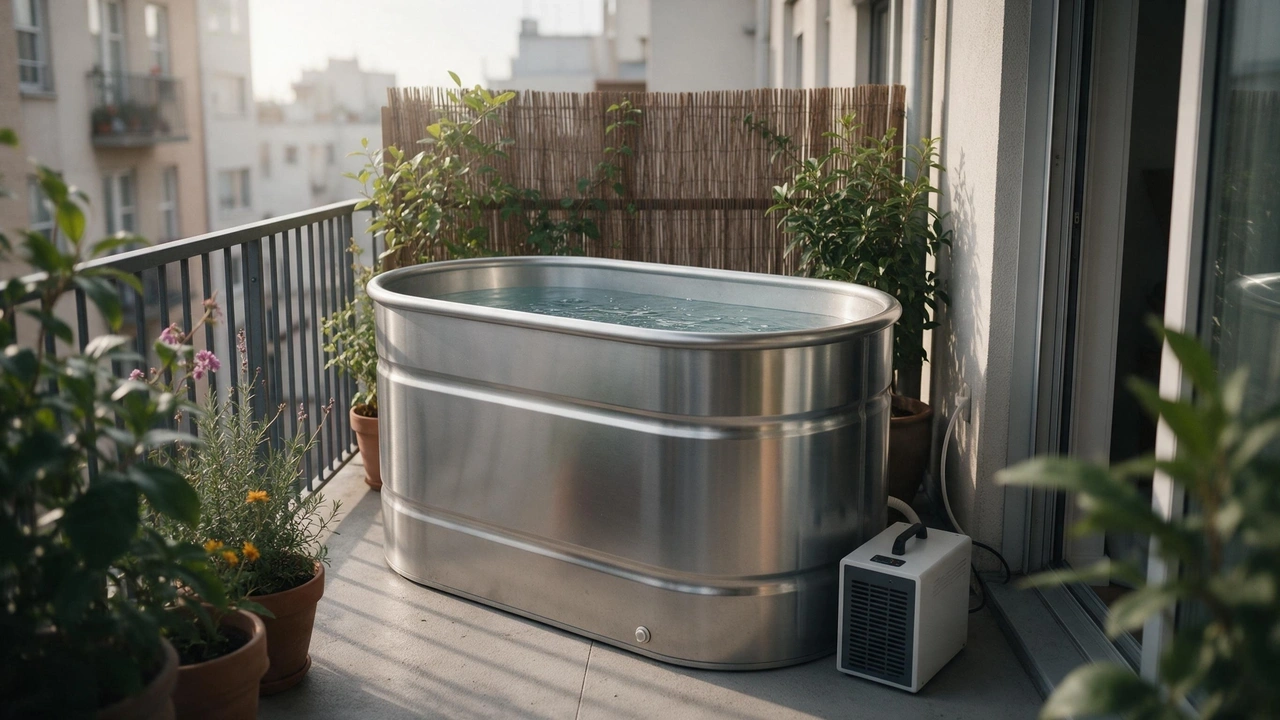
A 100-gallon tub holds 830 pounds of water, plus 60–130 pounds of tub and chiller: 900–960 pounds on a few square feet. Most apartment balconies were not designed for that load. Check the lease and the structure first.
- Water weight
- 8.3 lb per gallon
- 100 gal, filled
- ≈890–960 lb with tub and chiller
- Typical balcony design
- About 40 lb per sq ft live load
- Practical tub size
- 50–75 gallons, or an inflatable
- Hard limits
- Lease, HOA, structural rating
Some links on this page are affiliate links.If you buy through them we may earn a commission at no extra cost to you. We do not accept payment for rankings. Read the full disclosure.
| Inflatable | Rigid | |
|---|---|---|
| Empty weight | 15–30 lb | 40–90 lb |
| Filled volume | 60–80 gal | 60–100 gal |
| Footprint | Round, 29–33 in | Oval or square, 4–5 ft |
| Insulation | Poor; air gap | Better; foam wall |
| Durability | 1–3 seasons | 5–10 years |
| Balcony fit | Easy to move and store | Needs a permanent spot |
A cold plunge on an apartment balcony is possible, but the tub you can carry is not the tub you can fill. Water weighs 8.3 pounds per gallon, so a modest 75-gallon tub is 623 pounds of water before you add the shell, the chiller, or a person. The balcony decides the size, not the other way around.
A balcony cold plunge is any tub small enough to stay within the structure’s load limit, the lease, and the drainage path available. In practice that means 50–75 gallons, a rigid or inflatable tub, and a plan for every gallon that goes in.
Weight comes first
The empty tub is irrelevant. A 100-gallon inflatable might weigh 25 pounds, which tells you nothing about the 830 pounds it holds. Calculate the filled weight before you compare models:
water weight = gallons × 8.3
system weight = water + tub + chiller + lid
Then add the person. A 180-pound adult entering a 100-gallon tub brings the total to roughly 1,070–1,140 pounds, concentrated on a footprint about the size of a doormat.
| Tub size | Water | Tub + chiller | Filled system | Per sq ft |
|---|---|---|---|---|
| 50 gal | 415 lb | 40–90 lb | 455–505 lb | 91–101 psf |
| 75 gal | 623 lb | 50–110 lb | 673–733 lb | 96–105 psf |
| 100 gal | 830 lb | 60–130 lb | 890–960 lb | 111–120 psf |
The per-square-foot column assumes a typical footprint: about 5 square feet for a 50-gallon tub, 7 for a 75, and 8 for a 100. A narrower tub with the same volume produces a higher number, because the same weight sits on less area.
That column is the one a structural engineer will ask about. Total weight matters, but pressure on the slab is what causes deflection and cracking.
What a balcony is designed to carry
Residential floors and balconies are commonly designed for a live load around 40 pounds per square foot, with additional factors for dead load, wind, and safety. A 100-gallon tub at 111–120 psf is roughly three times that design load.
That does not mean the balcony fails at 41 psf; design loads carry safety factors, and a tub placed against the building wall behaves differently from one cantilevered at the railing. It does mean the tub is outside what the balcony was designed for, and a guess is not good enough.
Three factors make it worse:
- Concentrated feet. Many tubs sit on four small pads, not a continuous base. A plywood or rubber mat spreads the load, but it does not change the total.
- Age and construction. A 1960s wood-framed balcony and a modern concrete slab are different structures. Surface appearance tells you nothing.
- Water sloshing. A person getting in and out moves the load dynamically, so the static number is optimistic.
For anything above 50 gallons, ask the building manager for the balcony’s design load and, if the answer is vague, pay a structural engineer for an hour. That is cheaper than a repair bill and much cheaper than an injury.
Small tubs that fit the constraint
The practical options for an apartment:
- Inflatable tub, 60–80 gallons. Empty weight 15–30 pounds, round footprint 29–33 inches, and it can be deflated and stored. Insulation is poor, so the chiller works harder.
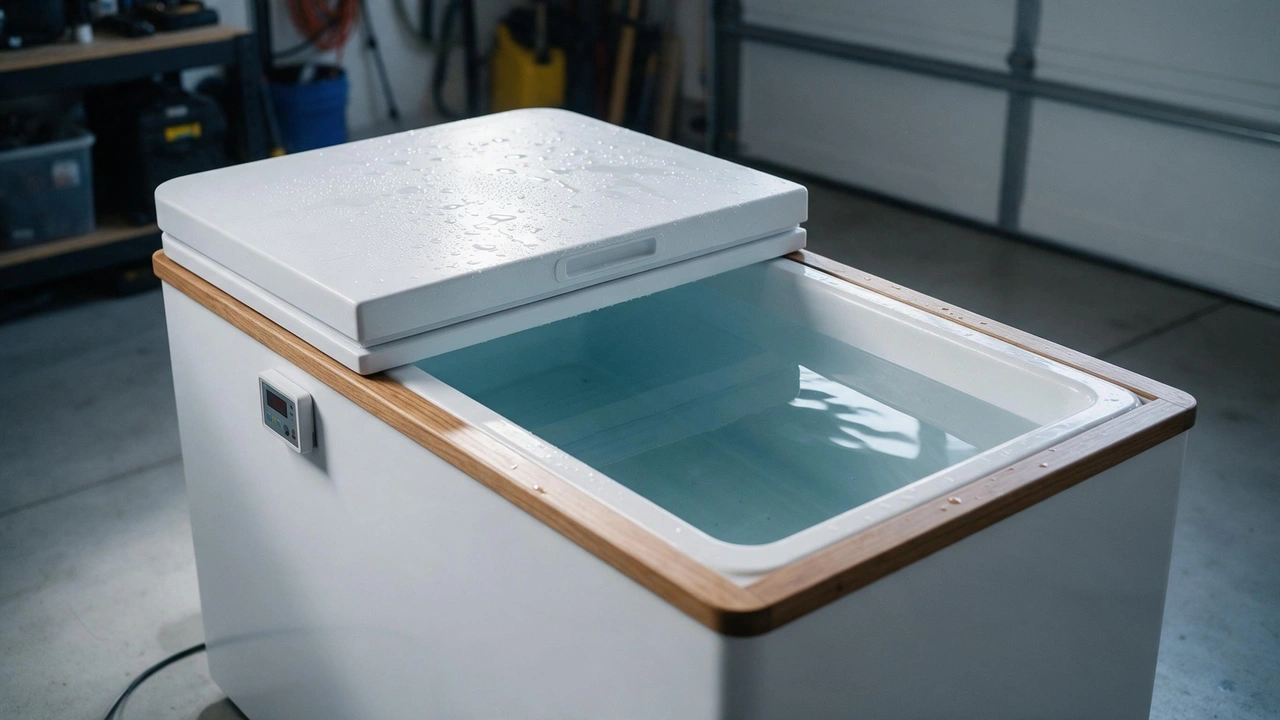
- Rigid rotomolded tub, 50–75 gallons. Better insulation and a real lid, but 40–90 pounds empty and a permanent footprint.
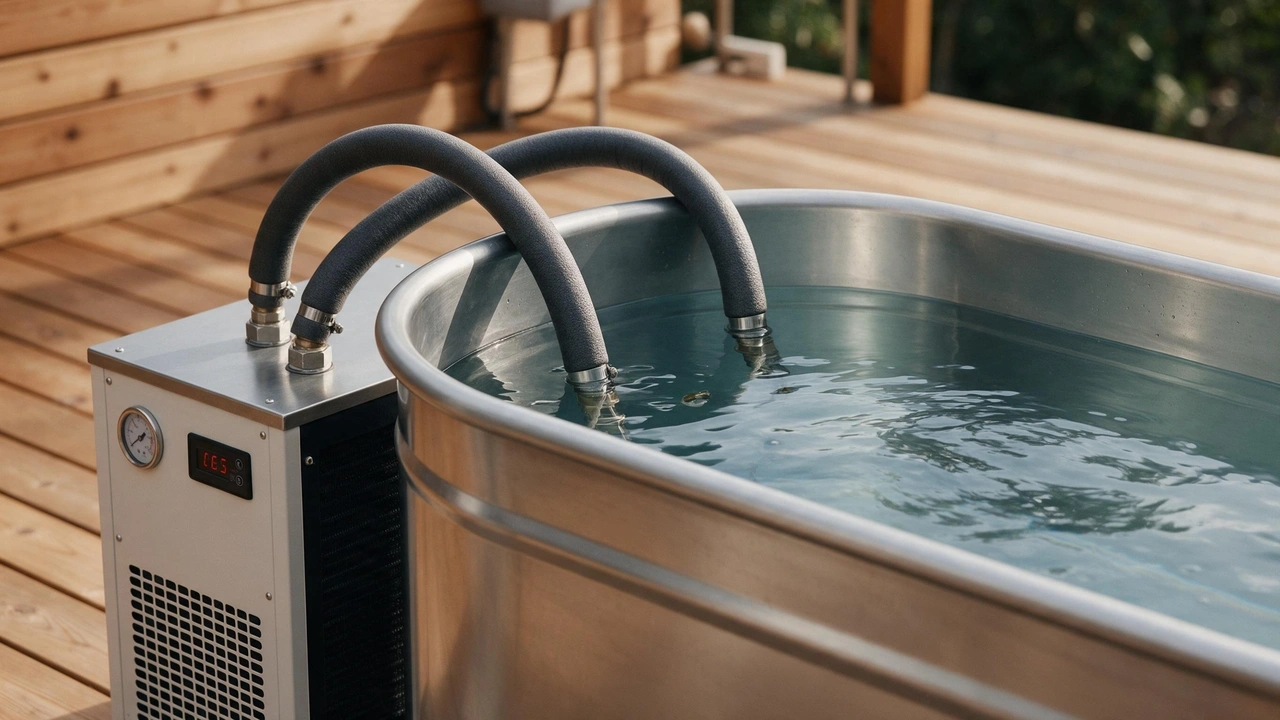
- Stock tank, 50–100 gallons. Cheap and durable, but heavy when filled and not insulated at all.
- Foldable or collapsible tub. Light and storable, with thin walls and a short working life.
Below about 50 gallons, an adult cannot submerge their shoulders. A 40-gallon tub is a foot bath with ambitions.
If you are still choosing, best cold plunge tub covers the model categories; the balcony constraint should override most of the feature comparison.
Water in, water out
Filling is easy. Draining is the part that gets renters in trouble. A 100-gallon tub emptied onto the balcony floor is 830 pounds of water looking for the lowest point, which is usually the unit below.
Use a submersible pump and a hose to a bathtub, a utility sink, or a building-approved drain. A small pump moves 5–10 gallons a minute, so a 75-gallon change takes 8–15 minutes.
Do not drain over the railing; it stains facades and violates most leases. The balcony scupper is sized for rain, not a tub.
The lease, the HOA, and the neighbor below
Read the lease before you read a product page. Look for clauses on water furniture, balconies, structural alterations, noise, and nuisance. Many leases prohibit anything that holds standing water; many HOAs prohibit visible tubs from the street or common areas.
Get approval in writing. A property manager’s verbal “should be fine” is not a defense when the maintenance supervisor files a report.
Renters insurance is worth checking too: a leaking tub that damages the unit below can become a liability claim, and some policies exclude water damage from appliances you installed.
Noise and vibration
A chiller runs at roughly 45–60 dB at three feet, similar to a refrigerator or a quiet conversation. The sound is not usually the problem. The vibration is.
Compressors transmit low-frequency vibration into the slab, and a concrete balcony is an efficient path into the room below. Set the chiller on a rubber or cork pad, keep it off the railing, and avoid running it during quiet hours. If the neighbor below works nights, you will hear about it.
Cooling without a chiller
Not every balcony tub needs a chiller. Three lower-tech options:
Evaporation. A fan blowing across the water surface can drop the temperature a few degrees in dry air. It works in Albuquerque and poorly in Miami, and it raises the humidity in the room if the tub is indoors.
Ice. One 20-pound bag of ice absorbs about 2,880 BTU as it melts. In a 60-gallon tub (499 pounds of water), that is a drop of roughly 5.8°F. In a 100-gallon tub, about 3.4°F. Ice is a top-up, not a cooling system.
Frozen bottles. A gallon jug of ice weighs 8.3 pounds and absorbs about 1,195 BTU. In a 100-gallon tub that is about 1.4°F per jug. Four jugs rotated from the freezer buy you 5–6°F, which is often enough for a short session.
None of these hold a setpoint. If you want 45°F every morning, you need a chiller, and the electricity math is in cold plunge electricity cost. Whatever the cooling method, the water still needs filtration and sanitizer; cold plunge water care covers that routine.
Safety on a wet balcony
- Use a GFCI outlet and keep cords out of splash range. No daisy-chained extension cords.
- Never run a cord across the walking path to the door.
- Use a lid, and lock it if there are children in the building.
- Keep the tub away from the railing. Do not stand on the rim to climb in.
- Check the railing height and condition; wet hands and a slippery deck are a fall risk.
- Empty the tub before a freeze or a long absence. A split tub on a balcony is a water-damage claim.
The short version
Fifty to seventy-five gallons is the realistic ceiling for most apartment balconies. Weigh the filled system, add a person, divide by the footprint, and compare that with what the building was designed for. Then read the lease, plan the drain, and pad the chiller.
If any of those steps produces a no, believe it. A cold plunge you can use at a gym or a friend’s house is better than a structural repair. The tub itself is the cheap part of this decision.
How to do it
- Weigh the full tub, not the empty oneMultiply gallons by 8.3, then add the tub, chiller, lid, and one person. Write the number down before you shop, because it eliminates most tubs immediately.
- Read the lease and the HOA rulesSearch for water furniture, balconies, weight limits, noise, and nuisance clauses. Ask the property manager in writing rather than relying on a verbal yes.
- Get a structural opinionFor anything over 50 gallons, ask a structural engineer or the building manager about the balcony's design load. A generic answer from a leasing office is not an engineering opinion.
- Plan the drain pathMeasure from the tub to a bathtub, floor drain, or hose bib. A 100-gallon tub needs a controlled drain, not a tipped-over dump over the railing.
- Test the noise before you commitRun the chiller for an hour and listen from inside with the door closed. Compressor vibration travels through a concrete slab further than the sound does.
Frequently asked questions
Can my apartment balcony hold a cold plunge tub?
Sometimes, but only a small one. A 50-gallon tub adds roughly 455–505 pounds, which many balconies can carry near the building wall. A 100-gallon tub at 900+ pounds usually needs an engineer's approval.
How much does a 100-gallon cold plunge weigh?
Water alone is 830 pounds at 8.3 pounds per gallon. Add 40–70 pounds for a rigid tub and 35–70 pounds for a chiller, and the filled system is about 900–960 pounds before a person gets in.
Do I need permission to put a tub on a balcony?
Assume yes. Most leases restrict water furniture, structural loads, and nuisances, and many HOAs ban them outright. Get written approval from the landlord and check the covenants before you buy anything.
How do I drain a cold plunge on a balcony?
Use a submersible pump and a hose to a bathtub, sink, or approved drain. Never dump 100 gallons over the railing or onto the balcony floor; it can stain the building, flood the unit below, and violate the lease.
Can I use a chiller on a balcony?
A small chiller can work if the balcony has a GFCI outlet, room for airflow, and no noise restriction. Compressor vibration through the slab is often the bigger complaint, so set the unit on a rubber pad.
What is the smallest practical cold plunge for an apartment?
A 60–80 gallon inflatable or a 50–60 gallon rigid tub. Below about 50 gallons, an adult cannot submerge their shoulders, which defeats the purpose for most people.
Sources
Some links are affiliate links.If you buy through them we may earn a commission at no extra cost to you. We do not accept payment for rankings. Read the full disclosure.